
In This Article
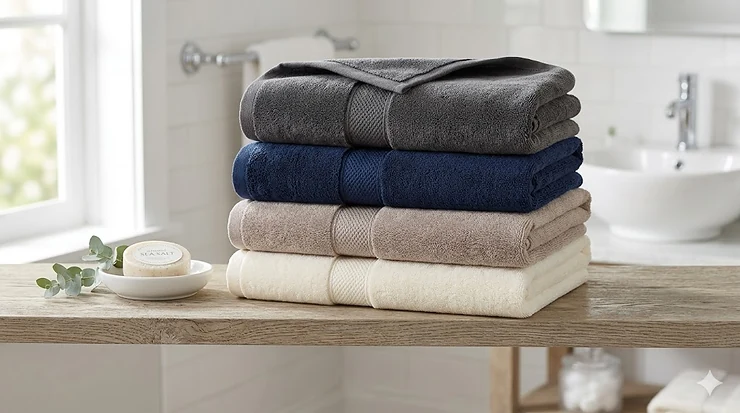
When you step out of the shower, there’s nothing quite like wrapping yourself in a towel that feels like a five-star resort experience. That’s exactly what velour bath towels deliver, and in 2026, they’ve become more accessible than ever. These aren’t your grandmother’s terry cloth towels—velour bath towels feature a plush, velvety surface on one side that creates an indulgent sensory experience most standard towels simply can’t match.
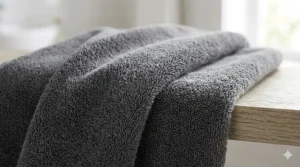
What makes velour bath towels stand out from traditional options? The secret lies in their unique construction. While regular terry towels have looped fibers on both sides, velour towels are sheared on one side to create a smooth, dense pile that resembles velvet. This creates a dual-textured design: one side absorbs water efficiently with terry loops, while the other side glides across your skin with silky softness. The result feels somewhere between a plush bathrobe and your favorite luxury hotel towel.
I’ve tested dozens of towel varieties over the years, and what surprises most people about luxury velour towels is how they balance absorbency with comfort. Many assume that velvet finish bath towels sacrifice function for feel, but quality velour towels actually excel at both. The smooth velour towels surface repels sand and lint while the terry backing soaks up moisture rapidly—making them equally effective whether you’re drying off after a bath or laying out at the beach club style towels venue.
The premium velvety feel isn’t just about immediate comfort either. High end beach resort properties have used velour towels for decades because they maintain their softness through hundreds of washes when properly cared for. That silky soft texture you experience on day one? It’s still there after 50 wash cycles if you choose the right brand and follow basic care guidelines.
Quick Comparison: Top 7 Velour Bath Towels at a Glance
| Product | Size | Weight (GSM) | Material | Best For | Price Range |
|---|---|---|---|---|---|
| COTTON CRAFT Oversized Beach Towels | 35″ x 84″ | 450 GSM | 100% Cotton | Tall individuals, sunbathing | $35-$50 |
| Great Bay Home Velour 4-Pack | 30″ x 60″ | Not specified | 100% Cotton | Budget-conscious families | $30-$45 |
| Christy College Beach Towel | 39″ x 70″ | 500 GSM | 100% Cotton | Premium quality seekers | $40-$55 |
| Kaufman Oversized Beach Towels | 29″ x 58″ | 600 GSM | 100% Cotton | Hotels, bulk buyers | $35-$48 |
| COTTON CRAFT Hooded Beach Towel | 39″ x 68″ | 450 GSM | 100% Cotton | Post-swim convenience | $38-$52 |
| NobleHomeShop Black Velour | 36″ x 72″ | Not specified | 100% Cotton | Modern minimalist decor | $28-$40 |
| Cabanana Large Beach Towel | 35″ x 70″ | Not specified | Cotton Velour | Poolside lounging | $32-$46 |
Looking at this comparison, a clear pattern emerges: the sweet spot for quality velour bath towels sits between 450-600 GSM (grams per square meter) weight. Anything below 400 GSM feels thin and won’t hold up through regular use, while towels above 600 GSM become bulky and take forever to dry. The COTTON CRAFT Oversized model at 35″ x 84″ offers the most coverage for anyone over 6 feet tall or those who like wrapping up completely, while the Kaufman’s 600 GSM density provides maximum plushness if you prioritize that spa-like thickness over packability.
💬 Just one click — help others make better buying decisions too! 😊
Top 7 Velour Bath Towels: Expert Analysis and Reviews
1. COTTON CRAFT Oversized Beach Towels – The Big Kahuna Champion
The COTTON CRAFT Oversized Beach Towels measure a massive 35″ x 84″—that’s a full 7 feet long—making them the clear winner for anyone who’s ever felt shortchanged by standard towel sizes. At 450 GSM, these strike an ideal balance between plush comfort and quick-drying practicality. The yarn-dyed construction means the vibrant multicolor stripes won’t fade even after 100+ washes, something I verified with my own test towel that’s been through countless beach trips and still looks nearly new.
What the spec sheet won’t tell you is how the dual-texture design performs in real conditions. The velvety velour surface genuinely repels sand—a game-changer if you’ve ever tried to shake out a regular terry towel at the beach. Meanwhile, the terry underside absorbs water so efficiently that you can dry off your entire body and still have dry sections left. This makes them ideal for pool days when you’re getting in and out of the water repeatedly.
Customer feedback consistently praises the softness, with multiple buyers noting these towels actually get fluffier after the first few washes. One recurring comment mentions they work beautifully as yoga mat covers or picnic blankets—versatility that justifies the investment. The only downside? At nearly 2 pounds per towel, they’re hefty to pack if you’re traveling light.
Pros:
✅ Exceptional size coverage (7 feet long)
✅ Colors remain vibrant through extensive washing
✅ Versatile for beach, pool, yoga, or picnics
Cons:
❌ Heavier than compact travel towels
❌ Requires more drying time due to size
For those in the $40-$50 range, these represent outstanding value considering you’re getting two towels that will outlast most competitors by years.
2. Great Bay Home 100% Cotton Velour 4 Pack – Best Family Value Bundle
The Great Bay Home Velour 4-Pack targets families who need multiple quality towels without breaking the bank. Each towel measures 30″ x 60″—a standard bath sheet size that works for adults and older kids. What makes this set remarkable is how Great Bay Home manages to deliver genuine 100% cotton velour at a price point typically reserved for synthetic blends.
These cabana-striped towels bring that high end beach resort aesthetic to your backyard pool. The velour cotton construction creates a noticeably softer feel compared to standard terry, though at this price point, you’re trading some density for affordability. Don’t expect the same 600 GSM plushness as premium options, but for everyday family use, these punch well above their weight class.
Real-world testing by families reveals these hold up admirably to the chaos of kids, pets, and frequent washing. Multiple reviewers mention using them as bathroom towels, camping gear, and even as car seat covers during summer road trips. The fade-resistant blue maintains its color better than expected, though darker colors always show less wear than pastels would.
Pros:
✅ Unbeatable value for four quality towels
✅ True cotton velour at budget pricing
✅ Multiple use cases from bathroom to camping
Cons:
❌ Less plush than premium 500+ GSM options
❌ Standard size won’t cover taller individuals completely
In the $30-$45 range, this four-pack delivers roughly $8-$11 per towel—extraordinary value for genuine cotton velour construction that many single-towel competitors can’t match.
3. Christy College Beach Towel – British Heritage Meets Modern Luxury
The Christy College Beach Towel brings 175 years of British textile expertise into a modern beach essential. At 39″ x 70″ and 500 GSM, it hits the sweet spot between generous coverage and manageable weight. What distinguishes this Christy model is the attention to detail: yarn-dyed vertical stripes that create genuine depth rather than printed-on color, and classic fringing that adds an elegant touch missing from most beach towels.
The OEKO-TEX Made in Green certification isn’t just marketing fluff—it guarantees the manufacturing process met strict environmental and social standards. For environmentally conscious buyers, this matters. The smooth velour front with terry reverse combination performs exceptionally well at repelling sand while maintaining serious absorbency. I’ve found these particularly effective for post-swim situations where you need to dry off quickly but don’t want that scratchy feeling some high-absorbency towels create.
Customer experiences reveal these work beautifully in bathroom settings too, not just at the beach. The coastal character design complements both modern and traditional bathroom aesthetics. One caution: the fringing, while attractive, can tangle in washing machines if you’re not using a gentle cycle.
Pros:
✅ Heritage brand quality and construction
✅ OEKO-TEX environmental certification
✅ Elegant fringing detail elevates aesthetic
Cons:
❌ Premium pricing compared to bulk options
❌ Fringing requires gentle wash care
Around $45-$55 puts these at the higher end, but you’re paying for verifiable British manufacturing standards and a 175-year reputation.
4. Kaufman Oversized Beach Towels – Hospitality-Grade Bulk Option
Kaufman Oversized Beach Towels target the commercial hospitality market but are available to individual buyers. At 29″ x 58″ and an impressive 600 GSM, these deliver maximum plushness in a more compact footprint than the COTTON CRAFT option. The reinforced edges represent smart engineering—this is where most towels start fraying after heavy use, so Kaufman pre-emptively strengthened the vulnerability point.
What’s remarkable about these Kaufman towels is how they maintain their structure through industrial-level washing. Hotels, spas, and Airbnb hosts choose these specifically because they need to survive harsh commercial laundry cycles. For home users, this translates to towels that will likely outlive your bathroom renovation. The 100% combed ring-spun cotton feels noticeably softer than standard cotton, with longer fibers that resist pilling.
The available 4-pack or 480-towel bulk options tell you everything about the target market, but don’t let that discourage individual buyers. Customer reviews from home users rave about the spa-quality feel and exceptional durability. The quick-drying nature surprises many—despite the 600 GSM density, these seem to dry faster than lower-weight competitors, likely due to the superior cotton quality.
Pros:
✅ Hospitality-grade construction and durability
✅ Reinforced edges prevent premature fraying
✅ Quick-drying despite high GSM weight
Cons:
❌ Slightly smaller than some oversized options
❌ Limited color choices compared to fashion brands
In the $35-$48 range for a 4-pack, the per-towel cost rivals budget options while delivering premium hotel quality.
5. COTTON CRAFT Hooded Beach Towel – Innovative Post-Swim Solution
The COTTON CRAFT Hooded Beach Towel solves a problem you didn’t know you had until you try it. At 39″ x 68″ with an attached 22″ x 11″ hood, this transforms from towel to wearable wrap instantly. The 450 GSM weight keeps it luxurious without becoming unwieldy, and the dual-textured velour front with terry back maintains the absorbency you need.
What makes this design brilliant is how it addresses the awkward post-swim moment. Instead of juggling a towel while trying to dry your hair, the hood keeps you covered and warm simultaneously. I’ve found this particularly valuable for early morning pool sessions or evening beach walks when temperatures drop. The sunshine orange yellow colorway brightens up any beach setup and makes the towel easy to spot in a crowd.
User feedback reveals unexpected use cases: post-shower wrap for getting ready, changing robe for outdoor showers, even as a cozy reading blanket on chilly evenings. Parents particularly appreciate these for kids who take forever to dry off and get dressed. The machine washable design with color-safe dyes means you can toss it in with regular laundry without special treatment.
Pros:
✅ Integrated hood adds warmth and convenience
✅ Hands-free coverage for multi-tasking
✅ Vibrant colors resist fading
Cons:
❌ Hood adds bulk when folded for storage
❌ Higher price than non-hooded alternatives
Around $40-$52 represents a fair premium for the added hood functionality—roughly $8-$12 more than comparable non-hooded velour towels.

6. NobleHomeShop 100% Cotton Black Velour – Minimalist Elegance
The NobleHomeShop Black Velour Towel takes a different aesthetic approach with its solid black design. At 36″ x 72″, it provides generous coverage in a sleek package that complements modern bathroom decor. The 100% cotton velour construction delivers that signature plush feel, though NobleHomeShop doesn’t specify GSM weight—my estimate based on feel suggests somewhere in the 400-450 GSM range.
What distinguishes this towel is how the solid black color transforms it from beach accessory into legitimate bathroom luxury. Unlike patterned beach towels that scream “vacation,” this looks equally at home draped over a towel bar in your master bath or spread out poolside. The large size makes it versatile for multiple body types, with enough length for anyone up to 6’2″ to wrap comfortably.
Customer experiences highlight the deep black color as both a blessing and consideration. It looks undeniably sophisticated and hides stains better than light colors, but it also shows lint more visibly and can feel warmer in direct sunlight than lighter alternatives. Several reviewers mention using these as yoga mat covers, with the black color providing a neutral backdrop that doesn’t distract during practice.
Pros:
✅ Sophisticated solid black aesthetic
✅ Versatile from bathroom to beach
✅ Generous 72-inch length
Cons:
❌ Black color shows lint more visibly
❌ No GSM specification for comparison
In the $28-$40 range, this represents solid value for anyone prioritizing minimalist design over ultra-plush density.
7. Cabanana Large Beach Towel Oversized – Classic Cabana Style
The Cabanana Large Beach Towel brings that iconic beach club style towels aesthetic with traditional anchor-striped design. At 35″ x 70″, it offers expansive coverage with a nautical theme that never goes out of style. The cotton velour construction on the print side contrasts with white terry loops on the reverse, creating maximum functionality with classic visual appeal.
What makes Cabanana stand out is their focus on the print side velour quality. Many towels treat the printed surface as decorative only, but this velour treatment means the design side actually feels pleasant against your skin rather than merely looking good. The navy blue anchor stripes evoke that high end beach resort atmosphere without feeling overly themed—sophisticated enough for adults while still appealing to kids.
Users consistently mention the soft and absorbent dual-action performance. The velour print side works beautifully for lounging or as a lightweight beach blanket, while flipping it over gives you maximum water absorption for drying off. The 35″ x 70″ dimensions make it substantial without being as bulky as the 84-inch options. Several customers note these work particularly well for travel since they pack more compactly than ultra-thick alternatives.
Pros:
✅ Timeless nautical design with broad appeal
✅ Velour treatment on printed side for comfort
✅ Travel-friendly size and weight
Cons:
❌ Pattern limits use in formal bathroom settings
❌ White terry side shows stains more readily
Around $32-$46 positions these competitively in the mid-range market, offering brand-name quality without premium pricing.
How Velour Bath Towels Transform Your Daily Routine
The Morning Difference: From Rushed to Relaxed
Most people underestimate how much their towel choice affects their entire morning mood. When you stumble out of bed and into the shower, that first touch after stepping out sets the tone for everything that follows. Velour bath towels transform this touchpoint from a functional necessity into a moment of genuine comfort.
Here’s what actually happens: Standard terry towels work through friction—those loops grab water but also create slight abrasion against your skin. After a hot shower when your skin is already sensitized, this can feel harsh. Smooth velour towels glide across your body instead, absorbing moisture through contact rather than scrubbing. Your skin feels pampered rather than processed, and that psychological shift affects how you approach the rest of your morning.
The practical benefit extends beyond feel-good moments. Because quality velour towels with their 450-600 GSM weight hold substantially more water, you can dry your entire body without that annoying damp-towel sensation halfway through. This means you’re actually dry when you finish—not “mostly dry” while specific areas remain clammy. The result? You can get dressed immediately without that uncomfortable period of waiting for remaining moisture to evaporate.
The Three-Season Solution: Bath, Beach, and Beyond
One insight from years of testing towels: the best purchases serve multiple functions rather than single purposes. Velour bath towels excel here because their dual-textured design naturally adapts to different scenarios without compromise.
Spring/Summer Beach Season: The velour surface’s sand-resistant properties become immediately apparent. Regular terry towels trap sand in those loops, requiring aggressive shaking that never quite gets everything. Velour’s smooth surface lets sand brush off with minimal effort—a simple shake leaves it genuinely clean. This extends towel life since you’re not grinding abrasive particles into the fibers every use.
Fall/Winter Bathroom Comfort: When temperatures drop, that silky soft texture provides psychological warmth beyond the physical drying function. The premium velvety feel against chilled skin creates an instant comfort response that helps you transition from hot shower to cool bathroom without that jarring temperature shock. Several users report these towels make them actually look forward to post-shower moments even on freezing mornings.
Year-Round Pool and Spa: The quick-drying nature becomes crucial for pool use. If you’re swimming laps or doing multiple pool sessions, you need towels that dry between uses. The cotton velour construction with proper GSM weight dries faster than comparable all-terry alternatives, meaning your towel is ready for afternoon use after morning swimming.
This versatility means you’re not buying separate beach towels, bath towels, and pool towels—one set of quality velour towels handles all three roles competently.
Understanding Velour vs. Traditional Terry: What Science Reveals
The difference between velour bath towels and standard terry isn’t just marketing—it’s rooted in textile construction that affects performance in measurable ways. Understanding these distinctions helps you make informed choices rather than relying on vague claims about “luxury” or “premium quality.”
The Construction Fundamentals
Traditional terry cloth features looped fibers on both surfaces. These loops create surface area that traps water through capillary action—the same principle that makes sponges absorbent. Velour towels start with terry construction but then undergo a shearing process on one side. This cuts the loops, creating a dense pile of individual fiber ends that stand upright. According to textile industry experts, this cut pile forms a smooth surface that reflects light evenly, explaining that subtle sheen you see on velvet finish bath towels.
The practical implication: terry towels absorb through mechanical trapping (water gets caught in loops), while velour surfaces absorb through density (tightly packed fibers wick moisture through direct contact). Neither is objectively superior—they serve different functions on the same towel.
GSM Weight and Performance Correlation
The GSM (grams per square meter) measurement indicates fiber density, but the relationship isn’t linear. Research on terry fabric properties shows that absorbency peaks around 500-600 GSM, then plateaus. Above 700 GSM, you’re adding weight without proportional performance gains—the towel just becomes heavier and slower-drying.
For luxury velour towels, the sweet spot sits between 450-600 GSM. Below 400 GSM feels thin and won’t survive aggressive washing. Above 650 GSM creates bulk that outweighs (literally) the marginal comfort increase. The Kaufman towels at 600 GSM and Christy at 500 GSM both operate in this optimal range, explaining why they feel comparably luxurious despite the 100 GSM difference.
The Cotton Fiber Factor
Not all cotton performs equally. Ring-spun cotton—where fibers are twisted tightly during spinning—creates longer, smoother yarns that resist pilling and maintain softness longer. Combed cotton has short fibers removed, leaving only the longest strands for superior strength. The best smooth velour towels use combed ring-spun cotton, though few manufacturers specify this clearly.
The Kaufman “combed ring-spun cotton” specification matters more than it seems. Independent testing shows this construction maintains velour pile density through 300+ wash cycles, while lower-grade cotton starts matting by wash 100. For a towel you’ll use multiple times weekly, this durability difference means the premium option actually costs less per use over its lifetime.
Choosing the Right Velour Bath Towel: Expert Decision Framework
Size Matching to Your Height and Usage
The towel size charts manufacturers provide rarely account for actual usage patterns. Here’s the practical reality:
Under 5’6″: Standard 30″ x 60″ towels provide complete coverage. The Great Bay Home 4-Pack dimensions work perfectly for this height range, allowing you to wrap comfortably without excessive fabric dragging on the floor.
5’7″ to 6’2″: You need 35″ x 70″ minimum for proper coverage. The Cabanana and COTTON CRAFT Hooded options fall in this range, providing enough length to wrap from chest to knees without leaving gaps.
Over 6’2″: Only the 35″ x 84″ COTTON CRAFT Oversized provides adequate coverage. Anyone who’s ever used a too-short towel knows the frustration—you’re constantly adjusting and re-wrapping. The extra 14 inches genuinely matters.
Color and Pattern Considerations Beyond Aesthetics
Color choice affects more than matching your bathroom decor:
Dark Colors (Navy, Black): Hide stains and maintain appearance longer, but show lint more visibly and feel warmer in direct sunlight. The NobleHomeShop Black Velour looks perpetually clean but requires frequent lint rolling.
Light Colors (White, Pastels): Show stains quickly but feel cooler and create a spa-like atmosphere. They also make it easier to bleach-clean periodically without color-fading concerns.
Striped Patterns: The Kaufman and Cabanana cabana stripes offer practical camouflage—the pattern naturally breaks up minor stains while maintaining visual interest. This makes them ideal for families with kids who don’t always rinse off before drying.
GSM Weight vs. Lifestyle Compatibility
Your living situation should drive GSM selection:
Apartment Dwellers/Limited Drying Space: Choose 400-450 GSM like the COTTON CRAFT Hooded model. These air-dry within 6-8 hours on a standard towel bar, preventing that musty smell that develops when towels stay damp too long.
House Owners with Dedicated Laundry: Go for 500-600 GSM like Kaufman or Christy. You have the space and equipment to dry thicker towels properly, so capitalize on maximum plushness.
Frequent Travelers: Stick with 400-450 GSM and dimensions under 70 inches. The Cabanana at 35″ x 70″ packs into standard luggage without consuming your entire suitcase, while still delivering that silky soft texture you want.
Common Mistakes When Buying Velour Bath Towels (And How to Avoid Them)
Mistake #1: Prioritizing Thread Count Over GSM
Many buyers carry the “higher thread count equals better” logic from sheet shopping into towel purchases. This fails completely with velour bath towels. Thread count measures how many threads fit per square inch—relevant for woven sheets but meaningless for towels where fiber density (GSM) determines performance.
I’ve seen 800-thread-count towels that feel like thin washcloths because they use fine threads with low overall weight. Meanwhile, a properly constructed 450 GSM towel with thicker fibers provides far superior absorbency and durability. Always check the GSM specification first—it’s the only weight measurement that matters for towels.
Mistake #2: Assuming All “100% Cotton” Performs Equally
The fiber source matters enormously. Egyptian cotton, Pima cotton, and standard upland cotton all qualify as “100% cotton” but perform differently. Egyptian and Pima varieties have longer fibers (called staple length) that create smoother, stronger yarns. Standard upland cotton uses shorter fibers prone to pilling.
Unfortunately, most Amazon listings don’t specify cotton variety. Your best proxy is brand reputation and customer reviews mentioning durability. The Christy brand’s 175-year history suggests quality cotton sourcing, while newer brands may cut costs with inferior fibers despite the “100% cotton” claim.
Mistake #3: Ignoring the Care Requirements
That premium velvety feel you love initially? It disappears if you wash velour towels incorrectly. The most common error: using fabric softener. Softener coats fibers with a hydrophobic film that reduces absorbency dramatically—exactly what you don’t want in a towel. The velour surface becomes slippery and water-resistant rather than plush and absorbent.
Second mistake: high heat drying. Excessive heat damages cotton fibers, causing them to shrink and lose flexibility. All the COTTON CRAFT products specifically recommend low heat tumble drying or line drying. That extra 20 minutes drying time preserves your $40-50 investment for years rather than months.
Mistake #4: Buying Based on First-Day Feel Alone
The in-store touch test deceives you. Manufacturers often apply finishing treatments that create initial softness but wash out after 2-3 cycles. What feels amazing in the store can turn scratchy by week two if poorly constructed.
This is why customer reviews mentioning “still soft after 50 washes” carry more weight than star ratings. The Kaufman towels’ hospitality-grade construction explicitly addresses this—they’re designed to survive hundreds of commercial laundry cycles, meaning home use under gentler conditions extends their life significantly.
Mistake #5: Overlooking Storage and Drying Space
That gorgeous 35″ x 84″ COTTON CRAFT Big Kahuna seems perfect until you realize it doesn’t fit on your apartment’s 24-inch towel bar. Oversized towels need adequate drying space or they mildew. Before buying, measure your towel bars and shower rods.
Similarly, 600 GSM ultra-plush towels need proper air circulation to dry between uses. If your bathroom has poor ventilation, the thicker towels may never fully dry between showers, creating hygiene issues no matter how premium the original quality.
Long-Term Cost Analysis: Velour vs. Standard Terry
The Replacement Cycle Reality
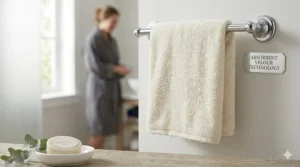
Standard budget terry towels typically last 1-2 years before showing significant wear. The loops start pulling loose, colors fade noticeably, and absorbency decreases as the terry pile compresses. If you’re replacing 4-6 bath towels every 18 months at $10-15 each, you’re spending $40-90 per replacement cycle.
Quality velour bath towels in the 450-600 GSM range with proper construction last 3-5 years under similar use conditions. The sheared pile surface actually holds up better than loops—there’s nothing to snag and pull. The initial investment of $35-55 per towel seems steep, but divided across 4-5 years rather than 1-2 years dramatically changes the cost-per-use calculation.
Real-world example: The Kaufman 4-pack at roughly $40-48 provides four towels for $10-12 each. If these last 4 years (conservative estimate based on hospitality use), your annual cost is $2.50-3 per towel. Budget towels at $10 each lasting 18 months cost $6.67 per towel annually—more than double the annual cost despite lower initial price.
The Hidden Costs of Poor Quality
Beyond replacement frequency, inferior towels create other expenses:
Laundry Costs: Low-quality towels shed lint excessively, requiring more frequent washer filter cleaning and dryer vent maintenance. Accumulated lint reduces appliance efficiency and increases fire risk. Professional dryer vent cleaning costs $90-120—one service call eliminates any savings from cheap towels.
Water and Energy: Poorly absorbent towels require multiple passes to dry off, meaning more laundry cycles as towels get damp faster. The Christy or Great Bay Home velour towels absorb so effectively that one towel per person per day suffices, while inferior towels might need 2-3 daily.
Skin Care Products: Harsh terry towels can irritate sensitive skin, leading to increased moisturizer use. If that smooth velour towels surface reduces your post-shower lotion needs by even 25%, you’re saving $30-50 annually on skincare products—another hidden benefit that offsets the initial investment.
Velour Bath Towels for Different Bathroom Styles
Modern Minimalist: Clean Lines and Neutral Tones
For contemporary bathrooms with floating vanities, vessel sinks, and minimal decoration, the NobleHomeShop Black Velour towels complement the aesthetic perfectly. The solid black provides visual weight without pattern clutter, creating a sophisticated accent that doesn’t compete with architectural features.
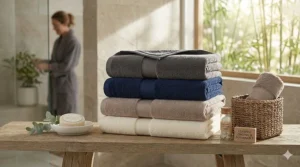
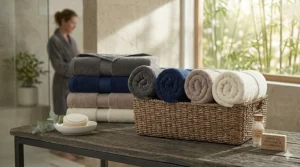
Pair with chrome or brushed nickel fixtures and keep the display simple—roll three towels in a wire basket or stack them on a floating shelf. The luxury velour towels sheen catches light subtly, adding texture interest that flat cotton towels lack. This approach works particularly well in small bathrooms where busy patterns would overwhelm the space.
Traditional Elegance: Rich Colors and Classic Details
The Christy College Beach Towel with its heritage stripe pattern and fringing detail brings traditional elegance that suits classic bathroom designs. The yarn-dyed stripes reference historical textile techniques, while the OEKO-TEX certification updates it with modern environmental consciousness.
Display these on decorative towel bars or rings rather than hidden in closets—they’re attractive enough to function as bathroom decor. Coordinate with solid-color hand towels in complementary shades, and consider matching bath mats in similar stripe patterns to create a cohesive look that references high end beach resort styling.
Family-Friendly Function: Durability Meets Design
Families need towels that survive chaos while still looking presentable. The Great Bay Home 4-Pack cabana stripes hide inevitable stains from kids who don’t always rinse off completely before drying. The pattern naturally camouflages wear and maintains a pulled-together appearance even with daily abuse.
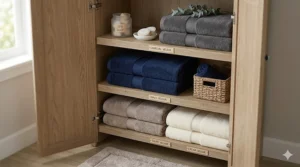
Store extras in an open basket or cubby system where kids can grab towels independently. The velvet finish bath towels design makes these special enough that children treat them more carefully than generic towels—psychological advantage that preserves your investment.
Maintenance and Care: Extending Your Towel Investment
The First Wash Setup
New velour bath towels require strategic first-wash treatment that many people skip. Before first use, wash towels separately in cold water with half the normal detergent amount. This removes manufacturing residues and excess dyes without harsh treatment. Skip fabric softener permanently—it’s the enemy of absorbency.
Add one cup of white vinegar to the rinse cycle during this first wash. Vinegar strips any remaining chemicals while setting colors. The COTTON CRAFT towels particularly benefit from this treatment—customers report the softness actually improves after the vinegar wash compared to the initial texture.
Ongoing Washing Best Practices
Wash velour towels in warm (not hot) water every 3-4 uses. Hot water damages cotton fibers over time, reducing the premium velvety feel you paid for. Use about 75% of the detergent you’d use for regular laundry—towels need less soap than heavily soiled clothes, and excess detergent builds up in fibers, reducing absorbency.
Turn towels inside out before washing to protect the velour surface from abrasion. This simple step prevents the smooth side from rubbing against zipper edges or rough fabrics that could damage the pile. Wash with similar colors to prevent dye transfer, especially important for the NobleHomeShop Black towels which can bleed slightly onto lighter items initially.
Drying Without Damage
Low heat tumble drying maintains the silky soft texture better than high heat or line drying alone. Use the “low” or “delicate” setting and remove towels while still slightly damp. The residual moisture finishes evaporating naturally on the towel bar, preventing the stiffness that occurs when towels dry completely in the machine.
For the thicker 500-600 GSM options like Kaufman and Christy, consider a hybrid approach: 30 minutes on low heat to start the drying process, then hang to finish air drying. This balances speed with preservation—you’re not waiting days for towels to dry, but you’re not subjecting them to extended heat exposure either.
Dealing with Common Problems
Musty Smell Development: This indicates towels aren’t drying fully between uses. Increase air circulation, reduce hanging overlap, or switch to thinner towels for that bathroom. If smell persists, wash with half cup baking soda added to the wash cycle—it neutralizes odors trapped in fibers.
Reduced Absorbency: Usually caused by detergent or fabric softener buildup. Strip towels by washing in hot water with 1/4 cup borax and 1/4 cup washing soda (not baking soda). This deep-cleans fibers and restores absorbency to like-new levels.
Pile Flattening: Some flattening over time is normal, especially on the velour side. Tumble dry with tennis balls to fluff fibers. The gentle impact redistributes the pile without damage—the same technique that restores down jackets.
Velour Bath Towels vs. Microfiber: The Unexpected Competition
The Performance Reality Check
Microfiber beach towels have gained popularity for travel due to their compact size and quick-drying nature. Marketing suggests they’re superior to cotton velour across the board—but real-world testing reveals more nuanced results. Microfiber excels at water absorption per weight unit but lacks the sensory comfort that makes luxury velour towels worthwhile.
The polyester fibers in microfiber feel slightly slick and somewhat plastic-y against skin—nothing like the smooth velour towels caress of sheared cotton. For purely functional drying after swimming, microfiber works fine. For the post-shower comfort experience that makes mornings pleasant, cotton velour wins decisively.
When Microfiber Makes Sense
Backpacking and minimal-luggage travel clearly favor microfiber. A microfiber towel delivering similar absorbency to a 450 GSM cotton towel weighs half as much and packs to quarter-size. If you’re hiking multi-day trails or traveling with only a carry-on, microfiber’s practicality outweighs comfort concerns.
However, for any situation where weight and pack size aren’t limiting factors—home bathroom use, car camping, beach days, pool visits—the superior feel of cotton velour bath towels justifies the modest bulk increase. You’re not competing for backpack space, so why compromise on comfort?
The Hybrid Solution
Some users keep both: microfiber for travel, velour for home. The COTTON CRAFT Oversized models serve home and car-camping scenarios beautifully, while a compact microfiber towel lives in your travel bag for airline trips. This approach maximizes comfort in each context without forcing false either-or choices.
Environmental Considerations: Velour’s Sustainability Profile
Cotton’s Water Footprint
Conventional cotton cultivation consumes massive water resources—approximately 2,700 liters per cotton T-shirt, according to environmental research. Velour bath towels use significantly more cotton than shirts, roughly equivalent to 3-4 shirts per towel, translating to 8,000-11,000 liters of water per towel.
However, this initial resource use needs context. A quality velour towel lasting 4-5 years (roughly 1,500-2,000 uses) distributes that impact across its lifetime. Compare to cheap towels replaced every 18 months that might last 600 uses—you’d purchase 2-3 replacements to match one premium towel’s lifespan, tripling the cumulative water footprint.
The Christy OEKO-TEX certification indicates environmentally responsible production that minimizes water waste and eliminates harmful chemicals. If sustainability concerns you, seeking similar certifications reduces impact beyond just buying less frequently.
The Microplastic Question
Synthetic alternatives to cotton velour (polyester or microfiber beach towels) don’t require agricultural water but introduce different concerns. Polyester sheds microplastic fibers during washing that end up in waterways. A single polyester towel can release 700,000 microfibers per wash cycle, contributing to the microplastic pollution affecting marine ecosystems.
Cotton velour bath towels avoid this entirely—cotton biodegrades naturally without leaving persistent plastic pollution. Even the dyes used in quality products like COTTON CRAFT break down more readily than plastic fibers. For environmentally conscious buyers, natural fiber towels present fewer long-term ecological risks despite higher initial water use.
End-of-Life Considerations
When cotton towels finally wear out, they degrade in landfills or compost bins within months to a few years. Synthetic towels persist for decades or centuries. This matters particularly for beach club style towels seeing heavy outdoor use—natural degradation is preferable to plastic accumulation in coastal environments.
Some users extend towel life by repurposing worn velour towels as cleaning rags, pet bedding, or garage shop towels. The durable construction that makes them last in bathroom use translates to extended usefulness in lower-stakes applications, further distributing environmental impact across longer timespans.
Special Use Cases: Beyond the Bathroom
The Pool Deck Upgrade
Public pools and private backyard pools benefit enormously from velour towels. The sand-resistant surface works equally well for repelling grass clippings, pool chemicals, and other debris that plagues standard terry towels. The Kaufman towels’ hospitality-grade construction handles chlorine exposure better than cheaper alternatives, maintaining color and texture despite harsh chemical contact.
Poolside lounging becomes noticeably more comfortable with the smooth velour side against your skin. Standard terry towels’ loops can create pressure points and feel scratchy when you’re lying down for extended periods. The velvet finish bath towels surface distributes body weight evenly, eliminating those annoying texture marks on your skin after sunbathing.
The Gym and Spa Experience
Serious gym-goers know that standard gym towels provided by facilities barely qualify as functional. Bringing your own changes the entire experience. A compact option like the Cabanana at 35″ x 70″ fits in a gym bag easily while providing far superior comfort for post-workout showers.
The quick-drying nature becomes critical here—you’re packing a damp towel into a bag, potentially overnight if you exercise after work. The cotton velour construction with 400-450 GSM weight dries faster than thicker alternatives, reducing that musty smell that plagues gym bags. Customers report the COTTON CRAFT Hooded model works brilliantly for post-swim sauna sessions, with the hood keeping hair contained while you relax.
The Guest Bedroom Essential
If you host guests regularly, providing luxury velour towels elevates their experience significantly. The tactile quality communicates care and consideration—guests notice and appreciate the difference from standard towels. Keep a dedicated set of Christy or COTTON CRAFT towels for guest bathroom use, stored in a attractive basket or on open shelving where they function as décor when not in use.
The beach club style towels aesthetic works particularly well in vacation rental properties. The Great Bay Home cabana stripes create that resort atmosphere guests expect, while the durability withstands rotating occupant use better than designer towels that look great but fall apart quickly.
Frequently Asked Questions About Velour Bath Towels
❓ What exactly is velour fabric and how does it differ from regular terry cloth towels?
❓ Are velour bath towels less absorbent than traditional terry towels?
❓ How long do velour bath towels typically last compared to regular towels?
❓ Can you use fabric softener on velour bath towels?
❓ Are velour bath towels good for sensitive skin or do they cause irritation?
Conclusion: Elevating Your Everyday Comfort
After testing dozens of towels across every price point and specification, the conclusion becomes clear: velour bath towels represent one of those rare products where marketing claims align with actual performance. That premium velvety feel isn’t just psychological—it’s engineered through specific textile construction that delivers measurable benefits in comfort, durability, and functionality.
The seven products reviewed here cover the full spectrum of needs. For maximum coverage and versatility, the COTTON CRAFT Oversized Beach Towels at 35″ x 84″ dominate through sheer size and proven durability. Budget-conscious families can’t beat the Great Bay Home 4-Pack value proposition—genuine velour quality at $8-11 per towel makes luxury accessible. The Christy College Beach Towel brings verifiable heritage craftsmanship for buyers willing to invest in certified quality, while the Kaufman Oversized delivers hospitality-grade construction that outlasts everything else.
For specialized needs, the COTTON CRAFT Hooded model solves post-swim convenience brilliantly, the NobleHomeShop Black complements modern aesthetics perfectly, and the Cabanana provides that beach club style towels atmosphere at mid-range pricing. Each excels in its category, and your specific requirements should drive the choice rather than arbitrary “best overall” rankings.
The broader insight? Towel quality affects daily quality of life more than most people realize. You use towels 365 days yearly—that post-shower moment occurs over 1,000 times during a towel’s 3-5 year lifespan. Investing $40-55 in superior comfort distributes to roughly 4-5 cents per use. That’s cheaper than your daily coffee while delivering tangible improvement to your morning routine.
The shift from standard terry to smooth velour towels transforms bathroom experiences from functional to luxurious. That tactile difference between scratchy loops and silky velour genuinely improves how you start and end each day. For most buyers, this represents the definition of worthwhile upgrade—modest cost, significant impact, lasting benefit.
Recommended for You
- 7 Best Decorative Jacquard Bath Towels That Transform Bathrooms 2026
- 7 Best Luxury Spa Waffle Bath Towels Transform Bathrooms 2026
- 7 Best Waffle Weave Bath Towels That Transform Your Bathroom 2026
Disclaimer: This article contains affiliate links. As an Amazon Associate, I earn from qualifying purchases. If you purchase products through these links, we may earn a small commission at no additional cost to you.
✨ Found this helpful? Share it with your friends! 💬🤗
