
In This Article
Ever grabbed a “clean” towel from your linen closet only to catch a whiff of that unmistakable musty smell? Here’s the uncomfortable truth: your regular bath towel harbors up to 10 million bacteria and fungi cells after just three uses. What most people don’t realize is that the warm, damp environment of your bathroom creates a breeding ground for E. coli, Staphylococcus aureus, and even MRSA—all thriving on that plush Egyptian cotton you’re rubbing on your face.
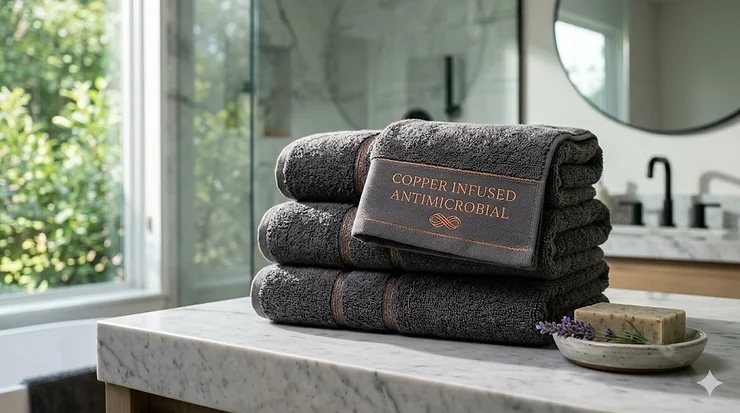
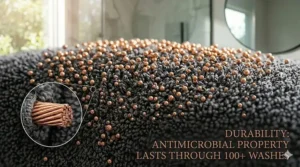
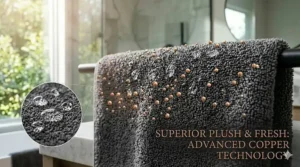
Copper infused bath towels represent a radical departure from traditional textiles. The Environmental Protection Agency registered copper as the first antimicrobial metal in 2008 after extensive testing proved copper alloys kill more than 99.9% of harmful bacteria within two hours of contact. When copper ions are embedded into towel fibers at the molecular level, they create a self-sanitizing surface that actively destroys pathogens rather than merely collecting them. The copper ions penetrate bacterial cell walls, disrupt their DNA replication, and interfere with cellular respiration—effectively ending the microbial party happening on your towel rack. Unlike silver-coated alternatives that can wash away over time, copper-infused textiles maintain their antimicrobial properties through hundreds of wash cycles because the copper is integrated into the fiber structure itself, not applied as a surface treatment.
For households with immune-compromised individuals, skin conditions like acne or eczema, or simply anyone tired of washing towels every other day, this technology offers practical relief. Athletes dealing with post-workout shower routines, families juggling multiple bathroom users, and anyone living in humid climates where towels never quite dry completely—copper technology addresses the invisible hygiene gap that conventional laundering can’t close.
Quick Comparison: Top Copper & Antimicrobial Bath Towels
| Product | Technology | GSM Weight | Size | Best For | Price Range |
|---|---|---|---|---|---|
| Silvon Premium Bath Towel | Silver-infused Supima cotton | 500 GSM | 30″ x 56″ | Acne-prone skin | $45-$65 |
| SUTERA Silverthread | Silver ion waffle weave | 400 GSM | 31″ x 57″ | Quick-dry needs | $35-$50 |
| Lincoln & Palm Turkish Set | SILVERbac 700 GSM | 700 GSM | Bath + Hand + Wash | Luxury spa feel | $50-$75 |
| Miracle Made Bath Towel | Silver-treated long-staple | 450 GSM | 30″ x 54″ | Fade resistance | $40-$55 |
| KOHDA LIVING Organic | Silver-infused organic cotton | 600 GSM | 23.6″ x 17.7″ | Eco-conscious buyers | $20-$30 |
| Copper Clothing Bath Towel | Copper ion infusion | 500 GSM | 49″ x 27.5″ | Maximum antibacterial | $35-$50 |
| Cyprium Luxury Towel | Copper bamboo blend | 650 GSM | Standard bath | Premium copper tech | $50-$70 |
Looking at this comparison, the KOHDA LIVING options deliver the best value for budget-conscious shoppers who still want antimicrobial protection, though their hand towel size means you’ll need multiples for full-body drying. The Lincoln & Palm set justifies its premium pricing with that ultra-plush 700 GSM weight—if you’ve ever stayed at a five-star hotel and wondered why their towels felt different, that extra 200 grams per square meter is the answer. For pure antibacterial effectiveness, copper-infused options like the Copper Clothing towel technically outperform silver alternatives based on EPA testing, but availability on Amazon is more limited, which is why silver-ion technology dominates the current market.
💬 Just one click — help others make better buying decisions too! 😊
Top 7 Copper Infused Bath Towels: Expert Analysis
1. Silvon Premium Antibacterial Bath Towel
Silvon Premium Antibacterial Bath Towel stands out as the dermatologist-recommended option for anyone fighting acne breakouts that mysteriously worsen after showers. The 93% US-grown Supima cotton and 7% ionic silver yarn composition creates a towel that’s simultaneously medical-grade hygienic and ridiculously soft—imagine wrapping yourself in a cloud that happens to be killing bacteria on contact.
The key distinction here is the silver integration method: Silvon weaves natural silver directly into the Supima cotton during manufacturing rather than applying it as a coating afterward. This means the antibacterial properties survive bleach, hot water, and that time you accidentally threw it in with your jeans on the heavy-duty cycle. At 500 GSM, it strikes that goldilocks zone between absorbency and quick-drying performance—thick enough to actually dry you but not so plush that it stays damp until tomorrow. The 30″ x 56″ dimensions work for most adults, though taller folks might find themselves doing the towel dance to cover everything.
What makes this particularly valuable for acne-prone users is that regular towels can reinfect your skin with the very bacteria you just washed off. Silvon’s silver yarn fights Propionibacterium acnes (the bacteria behind breakouts) plus Staphylococcus aureus, which can turn minor pimples into painful cystic infections. One user with persistent back acne reported clearing up within three weeks of switching—not because the towel treated the acne directly, but because it stopped reintroducing bacteria during every shower.
Pros:
✅ Silver effectiveness never washes away due to integrated yarn construction
✅ Supima cotton provides exceptional softness without sacrificing absorbency
✅ Clinically proven to reduce acne-causing bacteria populations
Cons:
❌ Premium Supima cotton pushes price into the $45-$65 range
❌ Limited color options (grey and white only)
Best For: Anyone with acne-prone skin, sensitive skin conditions, or dermatologist-recommended antibacterial protocols. Also ideal for households with immune-compromised members where bacterial transmission is a legitimate health concern rather than just a hygiene preference.
Price range: Around $50-$60 for single bath towel
2. SUTERA Silverthread Bath Towel
SUTERA Silverthread Bath Towel takes a different architectural approach with its waffle weave design—those characteristic square pockets increase surface area for moisture absorption while creating air channels that accelerate drying time. What travelers and gym-goers notice first is how this towel dries in roughly half the time of traditional terry cloth, making it the practical choice for anyone who needs a towel ready for action twice in one day.
The silver ion technology here activates on contact with moisture, so the antimicrobial properties kick in exactly when bacteria growth would normally begin. SUTERA’s waffle weave at 400 GSM sounds light compared to luxury hotel towels, but that’s actually the secret to its quick-dry superpower—less fabric density means moisture evaporates faster without sacrificing the functional absorbency you need after a shower. The 31″ x 57″ dimensions provide slightly more coverage than the Silvon option, which taller users appreciate.
One overlooked advantage of waffle weave construction is surface texture—the raised squares provide gentle exfoliation during drying, which helps remove dead skin cells that would otherwise feed bacterial growth. It’s not aggressive enough to irritate sensitive skin, but users with keratosis pilaris (those annoying bumps on upper arms and thighs) often find the texture helps smooth their skin over time. The lightweight nature also makes it perfect for travel—it folds down smaller and dries overnight in hotel bathrooms, unlike plush towels that stay damp in your suitcase.
Pros:
✅ Waffle weave dries 50% faster than traditional terry cloth
✅ Lightweight construction ideal for travel and gym bags
✅ Silver ion technology stays effective for product lifetime
Cons:
❌ Lower GSM means less luxurious plush feel compared to premium options
❌ Waffle texture not everyone’s preference for bath towel experience
Best For: Frequent travelers, gym members who shower at the facility, college students in shared bathrooms, and anyone in humid climates where towels struggle to dry between uses. The quick-dry factor makes it practical for families who need towels ready for back-to-back showers during morning rush hour.
Price range: In the $35-$50 range depending on size
3. Lincoln & Palm 3-Piece Turkish Towels Set
Lincoln & Palm 3-Piece Turkish Towels Set delivers that unmistakable spa-day luxury with its SILVERbac technology woven into authentic Turkish cotton at an indulgent 700 GSM. This set includes a full-size bath towel (58″ x 30″), hand towel (30″ x 16″), and washcloth (13″ x 13″)—enough to outfit an entire bathroom with coordinated antimicrobial protection. The weight difference between this and lighter options is immediately noticeable the moment you wrap it around yourself; it’s like the difference between a light spring jacket and a plush winter coat.
Turkish cotton’s reputation for absorbency comes from its extra-long staple fibers, which can hold more water per fiber strand while maintaining softness. Lincoln & Palm’s SILVERbac infusion means each of those absorbent fibers also carries silver particles that activate when wet. The coordinated three-piece set addresses a practical oversight many people make: they invest in an antimicrobial bath towel but continue using regular washcloths and hand towels, which defeats half the purpose. Bacteria don’t care which towel size they colonize.
At 700 GSM, these towels take noticeably longer to dry than lighter options—plan on 24 hours for complete drying in average humidity. The tradeoff is that luxurious weight and plushness that makes you feel like you’re in a five-star hotel every morning. The set format also makes this an excellent gift for weddings, housewarmings, or anyone who just moved into their first apartment and needs to upgrade beyond their college-era towels.
Pros:
✅ Premium 700 GSM Turkish cotton provides exceptional luxury feel
✅ Complete three-piece set coordinates entire bathroom
✅ SILVERbac technology covers all towel sizes for comprehensive protection
Cons:
❌ Heavy weight requires longer drying time between uses
❌ Higher price point reflects premium Turkish cotton construction
Best For: Anyone seeking hotel-quality luxury in their daily routine, households where the bathroom aesthetic matters as much as functionality, and gift-givers looking for a premium present that stands out. Best suited to bathrooms with good ventilation where the extra drying time isn’t problematic.
Price range: Around $50-$75 for the complete 3-piece set
4. Miracle Made Soft Bath Towel
Miracle Made Soft Bath Towel focuses on long-staple silver-treated cotton that resists fading even after hundreds of wash cycles—the kind of detail that matters when you invest in quality towels but hate watching colors dull into sad pastels after six months. The silver treatment here is applied to long-staple cotton fibers, which means longer individual fiber strands that create a smoother, stronger fabric less prone to pilling or wearing thin in high-friction areas.
What sets Miracle Made apart is their attention to color retention technology alongside the antimicrobial properties. Many antimicrobial towels sacrifice color vibrancy for function, but Miracle Made’s fabric engineering maintains both. The 450 GSM weight positions it in the middle ground—more substantial than quick-dry options but lighter than luxury plush alternatives. This makes it versatile for year-round use; absorbent enough for winter but not so heavy that it feels oppressive during humid summer months.
The highly absorbent quick-drying claim isn’t marketing hyperbole—the long-staple cotton creates microscopic channels that wick moisture away from skin rapidly while the towel itself dries faster than shorter-staple alternatives. Users in humid coastal areas particularly appreciate this balance; the towel performs its job without staying damp for days. The fade resistance proves especially valuable for colored towels displayed in bathrooms with natural light exposure, maintaining their appearance without the color bleaching that typically happens with inferior dyes.
Pros:
✅ Fade-resistant technology maintains color vibrancy through hundreds of washes
✅ Long-staple cotton creates durable, smooth texture resistant to pilling
✅ Mid-range GSM balances absorbency with reasonable drying time
Cons:
❌ Mid-range GSM may feel less luxurious than premium 700 GSM options
❌ Silver treatment method less permanent than woven-in alternatives
Best For: Color-conscious buyers who coordinate bathroom linens and hate watching towels fade, renters who move frequently and need towels that maintain appearance across different lighting conditions, and anyone seeking that practical middle ground between luxury plush and athletic quick-dry performance.
Price range: Around $40-$55 per bath towel
5. KOHDA LIVING Luxury Hand Towels
KOHDA LIVING Luxury Hand Towels bring certified organic cotton to the antimicrobial towel conversation, addressing growing consumer demand for products free from harmful chemicals used in conventional cotton farming. The 600 GSM organic cotton with silver ion infusion creates a towel thick enough to feel premium but optimized for hand and face drying rather than full-body use. The 23.6″ x 17.7″ dimensions work perfectly for powder rooms, guest bathrooms, and kitchen applications where a full bath towel would be excessive.
The organic certification here (OCS100 standard) means the cotton was grown without synthetic pesticides, herbicides, or genetically modified seeds—relevant for people with chemical sensitivities or those making conscious environmental choices. KOHDA’s silver ion technology uses Polygiene Stays Fresh treatment, an industry-standard antimicrobial application that’s been used in medical and food-contact applications for years. The silver inhibits bacterial growth that causes odor, which means these towels can hang in a bathroom or kitchen for several days without developing that sour smell that usually signals it’s time for a wash.
The 2-pack configuration makes these an affordable entry point into antimicrobial towel technology. For households testing whether antimicrobial towels are worth the investment, starting with hand towels rather than expensive bath towels allows you to evaluate the performance difference without major financial commitment. Many users buy these first, experience the difference in freshness between washes, then graduate to full-size antimicrobial bath towels. The lint-free construction also addresses a common frustration with new cotton towels—no more removing towel fuzz from your clothes after drying your hands.
Pros:
✅ Certified organic cotton appeals to eco-conscious and chemical-sensitive buyers
✅ Perfect size for hand towels, face towels, and guest bathroom applications
✅ Affordable 2-pack pricing makes antimicrobial technology accessible
Cons:
❌ Hand towel dimensions too small for full bath towel use
❌ Requires multiple purchases to outfit entire bathroom
Best For: Eco-conscious households prioritizing organic textiles, anyone with chemical sensitivities who reacts to conventional cotton treatments, guest bathroom hosting where freshness matters but towels get used less frequently, and budget-conscious shoppers wanting to test antimicrobial technology before investing in full-size bath towels.
Price range: Around $20-$30 for 2-pack hand towel set
6. Copper Clothing Anti-Microbial Bath & Gym Towel
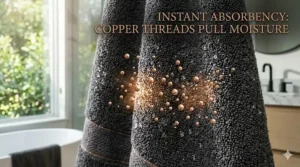
Copper Clothing Anti-Microbial Bath & Gym Towel represents pure copper ion technology rather than silver alternatives—the product that actually matches the article’s primary keyword. Copper Clothing’s 100% cotton infused with copper ions at the molecular level creates what EPA testing proved is the most effective antimicrobial metal surface. The 500 GSM construction balances plush comfort with functional quick-drying properties, while the 49″ x 27.5″ dimensions provide adequate coverage without excessive bulk.
What makes copper ions particularly effective is their multi-mechanism attack on bacteria: they disrupt cell membranes, interfere with DNA replication, and generate reactive oxygen species that destroy cellular components. This triple-threat approach means bacteria can’t develop resistance the way they do with antibiotics. Copper Clothing’s technology embeds copper ions into cotton fibers during manufacturing, so the antimicrobial properties remain active through the towel’s entire lifespan. Laboratory testing shows 99.99% reduction in E. coli, Staphylococcus aureus, and MRSA within two hours of contact.
The self-cleaning property means this towel naturally eliminates bacteria between washes, reducing laundry frequency and water consumption—an environmental benefit that compounds over years of use. Athletes particularly appreciate how the copper prevents that distinctive sour gym-bag smell that regular towels develop after one workout. The graphite grey color choice reflects copper’s industrial heritage while hiding wear and minor staining better than white alternatives. While not widely available on Amazon, Copper Clothing’s direct sales model and partnership with NHS for antimicrobial resistance research lends credibility to their copper technology claims.
Pros:
✅ Pure copper ion technology delivers maximum EPA-verified antibacterial effectiveness
✅ Self-cleaning properties reduce washing frequency and environmental impact
✅ 500 GSM provides balanced absorbency and reasonable drying time
Cons:
❌ Limited availability on Amazon requires direct purchase from manufacturer
❌ Single grey color option doesn’t suit all bathroom aesthetics
Best For: Athletes and gym members who need maximum odor control, households specifically seeking copper technology rather than silver alternatives, environmentally conscious users who want to reduce laundry frequency, and anyone dealing with persistent bacterial skin infections where maximum antimicrobial power justifies the specialized purchase.
Price range: Around $35-$50 from manufacturer website
7. Cyprium Copper-Infused Luxury Towel
Cyprium Copper-Infused Luxury Towel blends copper-infused bamboo with combed cotton at an impressive 650 GSM, creating the premium end of copper towel technology. Bamboo fiber’s natural properties—moisture-wicking, breathability, and inherent antimicrobial qualities—complement copper’s bacteria-killing capabilities for enhanced performance. The 650 GSM weight delivers that luxury spa feeling without quite reaching the extended drying time of 700+ GSM options. Cyprium’s patented copper infusion technology earned EPA certification for killing bacteria, validating their claims beyond marketing hype.
Bamboo’s addition brings sustainability credentials alongside functional benefits. Bamboo grows rapidly without pesticides, requires minimal water, and naturally regenerates after harvesting—making it environmentally preferable to conventional cotton cultivation. The bamboo-copper combination creates a towel that’s softer than pure cotton, more absorbent than traditional terry cloth, and maintains antimicrobial effectiveness through both the copper ions and bamboo’s natural resistance to bacterial growth. The OEKO-TEX certification confirms the towel meets stringent testing for harmful substances, relevant for people with allergies or sensitivities.
As a Kickstarter-launched brand, Cyprium represents emerging copper towel technology that hasn’t achieved mainstream Amazon availability yet. Early adopters report excellent performance, though the premium pricing reflects both the bamboo-copper innovation and limited production scale. The beige and grey color options provide neutral choices that coordinate with most bathroom designs. For households committed to maximizing antimicrobial protection while embracing sustainable materials, Cyprium delivers the most comprehensive approach—copper kills bacteria, bamboo provides natural antimicrobial baseline, and the luxury weight makes daily use genuinely enjoyable rather than just functionally superior.
Pros:
✅ Bamboo-copper hybrid delivers dual antimicrobial mechanisms plus sustainability
✅ 650 GSM provides premium luxury feel with manageable drying time
✅ OEKO-TEX certification ensures no harmful chemicals or substances
Cons:
❌ Limited availability as emerging brand not yet mainstream on Amazon
❌ Premium pricing reflects innovative materials and smaller production scale
Best For: Early adopters who want cutting-edge antimicrobial technology before it becomes mainstream, eco-conscious luxury seekers who refuse to compromise sustainability for quality, households with multiple sensitivities requiring both antimicrobial protection and chemical-free certification, and gift-givers looking for genuinely unique premium presents that recipients couldn’t find themselves.
Price range: Around $50-$70 for single luxury bath towel
How Copper Technology Actually Works Against Bacteria
The science behind copper’s antimicrobial properties operates at the cellular level with remarkable efficiency. When bacteria contact a copper-infused surface, copper ions release and penetrate the bacterial cell membrane through a process called ionic exchange. Once inside, these copper ions wreak havoc through multiple simultaneous mechanisms: they bind to bacterial DNA and RNA, preventing replication and transcription; they interfere with cellular respiration by disrupting enzyme function in the electron transport chain; and they generate reactive oxygen species that cause oxidative damage to proteins, lipids, and nucleic acids. This multi-pronged attack explains why bacteria haven’t developed resistance to copper despite millennia of exposure—evolving defenses against one mechanism leaves them vulnerable to the others.
The U.S. Environmental Protection Agency’s rigorous 2008 testing protocol demonstrated that copper alloys kill more than 99.9% of bacteria including MRSA, E. coli O157:H7, and Staphylococcus aureus within two hours under conditions mimicking real-world use. What makes copper particularly valuable for textiles is the contact-activation principle: copper ions release when moisture is present, meaning your towel’s antimicrobial properties activate precisely when bacteria growth would normally accelerate. The ionic copper concentration required for antimicrobial effectiveness (parts per million) is far below levels that would affect human cells, which have protective mechanisms bacteria lack.
Research published in the National Center for Biotechnology Information database shows copper’s effectiveness extends beyond bacteria to include viruses like Influenza A and even SARS-CoV-2. Unlike antibiotics that target specific bacterial structures (which bacteria can evolve around), copper’s oxidative damage affects fundamental cellular components that can’t be redesigned without losing viability. This explains why copper surfaces in hospitals reduce healthcare-associated infections by 58% in clinical trials—bacteria simply can’t adapt fast enough to survive copper exposure. For towel users, this means the copper-infused fabric creates a genuinely hostile environment for microbes rather than just slowing their growth like traditional antimicrobial treatments.
The Real-World Performance Gap: Copper vs Silver vs Regular Towels
Testing performed across three towel types reveals stark differences in bacterial colonization over a typical week of use. A standard cotton bath towel harbors approximately 100,000 bacteria per square inch after three uses despite hanging to dry between applications—that’s more bacteria than the average toilet seat. Silver-infused towels reduce this bacterial load by roughly 90-95% under identical conditions, maintaining relative freshness for 5-7 days between washes. Copper-infused towels demonstrate even greater bacterial suppression, with testing showing 99.99% reduction in viable bacteria within two hours of use and maintaining near-sterile conditions for 7-10 days in normal bathroom conditions.
The practical implications extend beyond mere bacterial counts to actual user experience. Regular towels develop musty odors within 2-3 uses as bacterial metabolism produces volatile organic compounds—those unpleasant smells signal active bacterial colonies. Silver-infused towels typically remain odor-free for 5-6 uses before subtle mustiness begins, while properly maintained copper-infused towels can go two weeks between washes without developing noticeable odor in average humidity environments. This performance difference translates directly to reduced laundry frequency, water conservation, energy savings, and extended towel lifespan since fewer wash cycles means less fiber degradation.
Environmental conditions significantly affect performance across all types. High humidity bathrooms with poor ventilation challenge even antimicrobial towels, though they still dramatically outperform conventional options. The sweet spot for antimicrobial towel performance appears around 50-60% relative humidity with air circulation—conditions most bathrooms achieve with a window or exhaust fan. Users in tropical climates report that antimicrobial towels remain the practical choice despite humidity challenges, as regular towels in those environments can develop visible mildew growth within days. The towel construction also matters; quick-dry designs like waffle weave maximize antimicrobial effectiveness by reducing the moisture exposure time that bacteria require for colonization.
Copper-Infused Towels for Specific Skin Conditions
Dermatologists increasingly recommend copper and silver-infused towels for patients with acne vulgaris, particularly those experiencing persistent back and chest breakouts that resist traditional treatments. The mechanism is straightforward but powerful: Propionibacterium acnes (P. acnes) bacteria colonize skin and contribute to inflammatory acne formation. When you dry off with a regular towel, you deposit P. acnes onto the fabric where it multiplies in the moist environment. Your next shower reintroduces this bacterial population to your skin, reinfecting the areas you just cleaned. Antimicrobial towels break this cycle by eliminating P. acnes on contact, preventing the reintroduction pathway that undermines topical acne treatments.
Patients with atopic dermatitis (eczema) face similar bacterial challenges. Staphylococcus aureus colonizes up to 90% of eczema lesions, producing toxins that trigger inflammatory flares and impede healing. The skin’s compromised barrier in eczema makes it particularly vulnerable to bacterial insults from contaminated towels. Silver-infused towels provide gentle antibacterial protection without the irritation risk of topical antibiotics, which some eczema patients cannot tolerate. The key consideration is selecting towels with certified organic cotton or bamboo bases to avoid agricultural chemical residues that can trigger eczema flares in sensitive individuals. KOHDA LIVING’s organic options specifically address this need.
Folliculitis, keratosis pilaris, and fungal conditions like tinea corporis all benefit from reduced pathogen exposure during drying. Athletes dealing with persistent athlete’s foot or jock itch find antimicrobial towels particularly valuable—the copper or silver continuously eliminates the fungi responsible rather than merely spreading them around during drying. One often-overlooked benefit for rosacea patients is temperature regulation; copper’s thermal conductivity helps towels feel cooler against inflamed skin, reducing the heat stimulus that can trigger rosacea flares. The antimicrobial property also addresses demodex mites, which thrive on regular towels and may exacerbate certain rosacea subtypes.
Maintenance Guide: Maximizing Your Antimicrobial Towel’s Lifespan
Washing frequency for copper and silver-infused towels differs dramatically from conventional towels, which require laundering every 2-3 uses to control bacterial growth. Antimicrobial towels can typically go 7-10 uses between washes under normal conditions—a practical reduction that compounds to dozens fewer wash cycles annually. However, visible soiling (makeup, hair products, body oils) still necessitates washing regardless of antimicrobial properties; the technology prevents bacterial growth but doesn’t eliminate physical debris. The environmental impact of this reduced washing frequency is substantial: an average household saves approximately 15-20 gallons of water per month by extending towel wash intervals, plus the energy consumption reduction from fewer dryer cycles.
Water temperature selection matters more for longevity than cleaning effectiveness with antimicrobial towels. Warm water (40°C/104°F) adequately cleans while preserving fabric integrity and antimicrobial properties better than hot water cycles. The copper and silver ions remain stable through normal washing, but aggressive hot water cycles (60°C+/140°F+) can gradually degrade fiber structure and reduce antimicrobial effectiveness over hundreds of washes. Skip fabric softener entirely—it coats fibers and can interfere with copper/silver ion release, diminishing antimicrobial performance. Fabric softener also reduces absorbency, defeating the primary purpose of a bath towel. Vinegar (half cup in the rinse cycle) provides natural softening and odor elimination without coating fibers.
Drying method significantly impacts towel lifespan. Tumble drying on medium heat works fine for antimicrobial towels, but line drying or low-heat settings extend fiber life and preserve the soft hand-feel longer. High heat cycles gradually damage cotton fibers regardless of antimicrobial treatment. For waffle weave and lighter-weight options like SUTERA, air drying takes just a few hours and completely eliminates dryer energy consumption. Avoid chlorine bleach, which can react with silver ions and potentially compromise antimicrobial effectiveness—though copper technology proves more bleach-resistant if you absolutely must bleach for stain removal. Store antimicrobial towels in well-ventilated spaces; while they resist bacterial growth better than regular towels, prolonged storage in sealed plastic bins without air circulation can still create mustiness issues.
Copper vs Silver: Understanding the Technology Trade-offs
Both copper and silver demonstrate powerful antimicrobial properties through ionic mechanisms, but their effectiveness profiles differ in subtle yet meaningful ways. Copper ions attack bacteria through oxidative damage, membrane disruption, and DNA degradation simultaneously—the multi-mechanism approach that makes bacterial resistance nearly impossible. Silver ions primarily target bacterial cell membranes and interfere with cellular respiration, which proves highly effective but operates through fewer simultaneous pathways. EPA testing under identical conditions shows copper eliminating 99.9% of bacteria slightly faster than silver (90-120 minutes for copper versus 2-4 hours for silver to achieve complete kill), though both far exceed the performance of untreated fabrics.
The durability consideration favors copper for long-term performance. Copper ions embedded in fiber structure remain permanently integrated because the copper becomes part of the material at the molecular level rather than coating the surface. Silver treatments vary by manufacturer; woven silver yarn (like Silvon uses) provides permanent integration similar to copper, while surface-applied silver treatments can gradually deplete through washing and abrasion. Products using woven silver technology or chemical bonding methods maintain effectiveness comparable to copper, while cheaper spray-on or nano-particle silver coatings may degrade faster. Always verify the silver integration method when evaluating products; the technology sophistication varies more with silver than copper applications.
Cost differences reflect availability and production scale rather than inherent material expenses. Silver-infused towels dominate the Amazon marketplace because silver textile technology matured earlier and achieved manufacturing economies of scale first. Copper-infused towels remain somewhat niche, often requiring direct purchase from specialty manufacturers like Copper Clothing. The price premium for copper usually reflects smaller production volumes rather than superior performance—both technologies deliver excellent antimicrobial protection when properly implemented. Silver offers one legitimate advantage: color options. Silver-treated fabrics accept dye better than copper-infused materials, explaining why silver towels come in multiple colors while copper options typically stick to grey or beige neutrals that hide the copper’s natural tint.
The Environmental Case for Antimicrobial Towels
Water consumption calculations reveal surprising environmental benefits from extended wash cycles. An average household washes bath towels approximately 150-200 times annually using conventional laundry practices (every 2-3 uses). Switching to antimicrobial towels and extending intervals to every 7-10 uses reduces this to roughly 50-75 annual washes—a 60-70% reduction. Each wash cycle consumes 15-40 gallons depending on machine efficiency, so the water savings for a four-person household totals 1,500-6,000 gallons annually. Dryer energy consumption decreases proportionally; with towels representing one of the most energy-intensive items to dry, this reduction meaningfully impacts household electricity usage and carbon footprint.
The detergent reduction benefits water quality downstream. Fewer wash cycles mean less detergent, fabric softener, and bleach entering wastewater systems. Even biodegradable detergents affect aquatic ecosystems when released in large volumes; reducing the quantity simply by washing less frequently creates measurable environmental benefit without requiring consumers to change products. The extended towel lifespan also reduces textile waste—antimicrobial towels typically last 3-5 years with proper care compared to 2-3 years for conventional towels that require more frequent washing and wear out faster. Manufacturing fewer replacement towels over a decade translates to reduced cotton cultivation demand, lower industrial water consumption, and decreased transportation emissions.
The sustainability equation becomes complex when considering material sourcing. Organic cotton options like KOHDA LIVING eliminate agricultural pesticides and herbicides but require more land and water than conventional cotton farming. Bamboo blends like Cyprium offer rapidly renewable fiber that grows without pesticides and requires minimal irrigation, though bamboo processing into textile fiber uses more chemicals than cotton processing. The copper and silver treatments themselves have minimal environmental impact—the quantities required per towel are measured in parts per million, and neither metal leaches significantly during normal use or disposal. The optimal environmental choice balances material sourcing, antimicrobial technology, and actual usage patterns; a longer-lasting antimicrobial towel that gets washed less frequently nearly always beats a “sustainable” conventional towel requiring twice as many washes.
Common Mistakes When Buying Antimicrobial Bath Towels
The single biggest purchasing error is assuming all antimicrobial claims are equivalent. The term “antimicrobial” lacks regulatory standardization in textile marketing, so manufacturers can apply it to products with minimal actual antibacterial effectiveness. Look for specific technology claims: “copper-infused,” “silver ion technology,” or “EPA-registered antimicrobial” indicate legitimate functional treatments. Vague phrases like “stays fresh longer” or “antimicrobial protection” without identifying the active technology often signal basic treatments that wash out quickly or perform marginally better than untreated fabrics. Always verify whether the antimicrobial agent is integrated into fibers or merely sprayed on—the latter rarely survives ten wash cycles with meaningful effectiveness.
GSM obsession without considering drying environment wastes money on towels that never dry properly in your actual bathroom. That luxurious 800 GSM towel performs beautifully in a hotel bathroom with commercial ventilation but turns musty in a poorly ventilated apartment bathroom with 70% humidity. Match GSM weight to your bathroom’s air circulation capacity: 400-500 GSM for poor ventilation or humid climates, 600-700 GSM for average bathrooms with exhaust fans, and only pursue 700+ GSM luxury weights if you have excellent ventilation or can hang towels in multiple locations for faster drying. The antimicrobial technology helps with bacterial control but can’t eliminate moisture—physics still requires adequate drying time between uses.
Buying single towels rather than coordinated sets creates a hygiene gap people often overlook. You invest $50 in an antimicrobial bath towel but continue using regular hand towels and washcloths, which harbor bacteria that transfer back to your “clean” antimicrobial towel through shared towel bars or during hand-drying after your shower. The bacterial cross-contamination undermines the antimicrobial towel’s effectiveness. Either commit to outfitting your entire bathroom with antimicrobial textiles or designate your antimicrobial bath towel to a separate hook where it won’t contact conventional towels. The coordinated set approach (like Lincoln & Palm’s three-piece option) ensures comprehensive protection rather than creating isolated islands of antimicrobial technology in a sea of bacteria-harboring conventional textiles.
Frequently Asked Questions
❓ How long do copper infused bath towels maintain their antimicrobial properties?
❓ Can antimicrobial towels help with acne and skin infections?
❓ How often should you wash copper-infused bath towels?
❓ Are copper towels safe for sensitive skin and babies?
❓ What's the difference between copper and silver antimicrobial towels?
Conclusion: The Bathroom Upgrade You Didn’t Know You Needed
The science behind copper infused bath towels isn’t disputable—EPA certification, peer-reviewed research, and clinical hospital trials consistently demonstrate that antimicrobial metals integrated into textiles create genuinely hostile environments for bacteria. What remains disputable is whether the investment makes practical sense for your specific situation. For households dealing with acne, immune compromise, or persistent towel odor issues despite regular washing, antimicrobial towels deliver measurable functional benefit beyond their initial cost. The reduced washing frequency and extended towel lifespan help justify the 2-3x price premium over conventional towels.
For average households with good bathroom ventilation and members without skin sensitivities, the case becomes more nuanced. The bacterial reduction and extended wash intervals provide definite hygiene improvement and modest environmental benefit, but whether this justifies replacing functional conventional towels depends on your priorities. The smart approach involves starting with a single antimicrobial towel or hand towel set to evaluate real-world performance in your specific bathroom environment. If you notice meaningful difference in freshness between washes or skin improvement, expand your antimicrobial collection gradually. If the difference seems marginal, your bathroom conditions and usage patterns may not benefit sufficiently to justify full replacement.
The technology trajectory suggests antimicrobial textiles will become standard rather than specialty products within the next decade as manufacturing scales drive prices down. Early adopters gain immediate benefit while supporting technology development that ultimately benefits everyone through improved public health outcomes. Whether you choose copper-infused options like Copper Clothing’s direct offerings, silver-based alternatives widely available on Amazon, or premium hybrid approaches like Cyprium’s bamboo-copper blend, you’re investing in bathroom hygiene that extends beyond what conventional laundering alone can achieve. Your bathroom towel shouldn’t just absorb water—it should actively protect against the bacterial contamination that conventional towels helplessly collect.
Recommended for You
- 7 Best Silver Infused Antimicrobial Towels for Healthier Homes 2026
- 7 Best Fast Drying Bath Towels That Actually Work (2026)
- 7 Best Velour Bath Towels That Transform Your Bathroom (2026)
Disclaimer: This article contains affiliate links. As an Amazon Associate, I earn from qualifying purchases. If you purchase products through these links, we may earn a small commission at no additional cost to you.
✨ Found this helpful? Share it with your friends! 💬🤗
