
In This Article
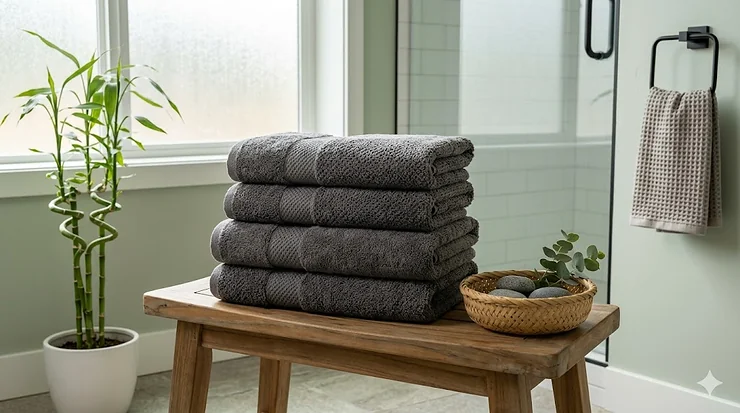
Ever pulled a damp towel off the rack only to be greeted by that musty, mildew smell? You’re not alone. Traditional cotton towes harbor bacteria in humid environments, creating odors that no amount of washing seems to eliminate permanently. Enter bamboo charcoal bath towels—a textile innovation that’s rewriting the rulebook on bathroom hygiene.
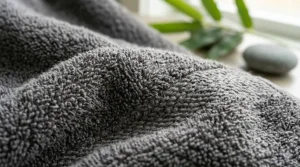
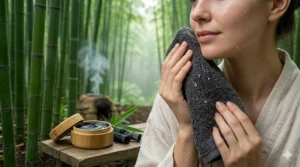
These aren’t your grandmother’s bamboo towels. We’re talking about towels infused with activated bamboo charcoal or constructed from charcoal-infused fibers that actively inhibit bacterial growth. The activated carbon technology works at a molecular level, trapping odor-causing compounds in its porous structure before they can proliferate. What most buyers overlook is that bamboo itself already possesses natural antimicrobial properties, but when you add activated charcoal to the equation, you’re essentially getting a dual-defense system against the funk.
The science backs this up. Research published in ScienceDirect demonstrates that bamboo charcoal exhibits excellent antibacterial performance against common pathogens, with activation processes increasing surface area and adsorption capacity significantly. For your bathroom, this translates to towels that stay fresher between washes, require less frequent laundering (saving water and energy), and maintain their softness longer than conventional alternatives.
Whether you’re a gym enthusiast tired of packing perpetually damp towels, a parent dealing with post-swim chaos, or simply someone who values a fresh-smelling bathroom without harsh chemical treatments, bamboo charcoal bath towels offer a practical solution rooted in both ancient wisdom and modern textile engineering.
Quick Comparison Table: Top Bamboo Charcoal Bath Towels at a Glance
| Product | Charcoal Content | Size | GSM Weight | Best For | Price Range |
|---|---|---|---|---|---|
| Lutava Charcoal Bath Towel | 35% Charcoal Viscose | 77cm x 143cm | Standard | Gym & Active Users | $65-$89 |
| Somara Activated Charcoal | 70% Bamboo Charcoal | 13.8″ x 29.5″ | Mid-weight | Face & Fitness | $25-$35 |
| BedVoyage Bath Sheet | 50% Bamboo Blend | 30″ x 70″ | 600 GSM | Tall Individuals | $50-$75 |
| Mosobam Turkish Blend | 50% Bamboo-Viscose | 30″ x 58″ | 700 GSM | Luxury Spa Feel | $45-$65 |
| Sunday Bedding Portugal | 15% Modal Charcoal | 76cm x 142cm | 600 GSM | Sensitive Skin | $60-$80 |
| Cozy Earth Nantucket | 40% Bamboo Viscose | 30″ x 58″ | 600 GSM | Quick-Dry Needs | $70-$90 |
| HIPHOP PANDA 2-Layer | Rayon from Bamboo | 30″ x 30″ | 500 GSM | Baby/Kids | $30-$45 |
Looking at this comparison, the Lutava model delivers the highest charcoal concentration for serious odor control, but if you’re prioritizing plush luxury, the Mosobam’s 700 GSM weight offers that hotel-quality thickness. Budget-conscious buyers should note that Somara and HIPHOP PANDA provide excellent entry points without sacrificing the core antimicrobial benefits. The BedVoyage bath sheet stands out for coverage—that 30×70 dimension matters if you’re over 6 feet tall and tired of towels that leave your legs exposed.
💬 Just one click — help others make better buying decisions too! 😊
Top 7 Bamboo Charcoal Bath Towels: Expert Analysis
1. Lutava Charcoal Activated Bath Towel
The Lutava Charcoal Activated Bath Towel brings serious engineering to odor elimination. Built with 35% charcoal viscose and 65% long-staple cotton, this towel activates with heat—meaning the warmer your skin or the dryer’s temperature, the more actively the charcoal binds to odor molecules. That 77cm x 143cm (roughly 30″ x 56″) dimension strikes a practical balance between coverage and manageability in most washing machines.
What the spec sheet won’t tell you: this towel dries 30% faster than standard cotton according to the manufacturer’s testing, which directly addresses the root cause of towel funk. Dampness breeds bacteria; faster drying means less opportunity for microbial growth. The intertwined loop construction isn’t just about aesthetics—it creates channels that wick moisture away from your skin more efficiently than flat-weave alternatives.
For whom is this ideal? Gym-goers who need a towel that can handle back-to-back workout sessions without developing that sour smell. Travelers who want to pack a towel that won’t turn their luggage into a biological experiment. Anyone who’s ever left a load of towels in the washer overnight and had to rewash them.
Customer feedback consistently highlights the reactivation feature—the charcoal becomes more effective with each tumble dry cycle, not less. One verified reviewer noted going seven days between washes during humid summer months with zero odor issues, something impossible with their previous cotton towels.
Pros:
✅ Heat-activated charcoal intensifies odor control with each use
✅ Maintains antimicrobial properties through 100+ washes
✅ Significantly faster drying time reduces bacterial breeding
Cons:
❌ Requires careful laundering (no fabric softeners which coat fibers)
❌ Higher upfront cost compared to conventional towels
In the $65-$89 range, you’re paying for specialized textile engineering and long-term durability. The value proposition improves if you calculate cost-per-use over 5+ years of reliable performance.
2. Somara Activated Charcoal Bamboo Towel
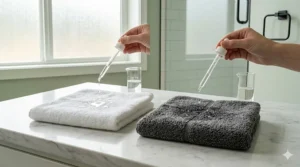
Somara’s Activated Charcoal Bamboo Towel takes a different approach: 70% all-natural bamboo charcoal fiber combined with 30% microfiber. That fitness/face towel dimension (13.8″ x 29.5″) makes this a specialized tool rather than a full-body bath towel, but its compact size becomes an advantage for targeted applications.
The patent-pending signature fabric blend here is genuinely innovative. Bamboo fibers naturally contain a substance called bamboo kun, which resists bacteria and fungi without chemical treatments. Layer on activated charcoal particles woven directly into the fiber matrix, and you get a textile that stays fresh even when used for high-sweat activities like hot yoga or HIIT training.
Who benefits most? Anyone with acne-prone skin should pay attention. Multiple users report fewer breakouts after switching to this as their dedicated face towel. The charcoal helps absorb excess oils and impurities without the abrasiveness of chemical exfoliants. Post-workout athletes appreciate that it doesn’t develop that gym-bag stench even when stored damp for several hours.
The microfiber component enhances absorbency beyond what pure bamboo alone could achieve—microfiber’s thin filaments create more surface area for water absorption, while the bamboo charcoal simultaneously pulls moisture away and neutralizes odors. It’s a genuine technological synthesis rather than simple material substitution.
Pros:
✅ Exceptionally high charcoal content (70%) for maximum odor neutralization
✅ Plush texture that’s gentle on sensitive facial skin
✅ Quick-dry capability makes it travel-friendly
Cons:
❌ Smaller dimensions limit use as a full bath towel
❌ Premium pricing for the size category
Around $25-$35 for this specialized towel positions it as a complementary purchase to your main bath towels—think of it as a targeted skincare investment that happens to be absorbent.
3. BedVoyage Charcoal Bamboo Cotton Bath Sheet
The BedVoyage Charcoal Bamboo Cotton Bath Sheet earns its name with that generous 30″ x 70″ coverage. Constructed from 50% viscose from bamboo and 50% long-staple cotton at 600 GSM, this towel was specifically engineered for taller individuals who find standard 56″ towels inadequate. That extra 14 inches of length means full coverage from shoulders to ankles without strategic wrapping.
The melange construction here refers to a blending technique where bamboo and cotton threads are interwoven rather than simply layered. This creates a fabric where each material’s strengths compensate for the other’s weaknesses—cotton provides structure and absorbency, bamboo contributes natural antimicrobial properties and faster drying times. The 600 GSM weight hits that sweet spot: plush enough to feel luxurious, but not so dense that it becomes a waterlogged brick after one use.
What makes this particularly valuable: the natural odor resistance means you can realistically use this towel for 3-7 days between washes according to the manufacturer. For a household of four, that translates to significantly reduced laundry loads over a year—environmental benefit with a bonus utility bill reduction.
Customer testimonials frequently mention the “no mildew smell even when forgotten in the washer” phenomenon. Bamboo’s natural resistance to mildew-causing bacteria means you won’t need to rewash loads you accidentally left overnight, unlike cotton which requires immediate retrieval or develops that distinctive sour funk.
Pros:
✅ Extra-large dimensions ideal for 6’+ individuals or those wanting full wrap coverage
✅ Maintains freshness for multiple uses between washes
✅ OEKO-TEX certified for chemical safety
Cons:
❌ Requires more storage space due to oversized dimensions
❌ Takes longer to fully dry despite quick-dry bamboo fibers
In the $50-$75 range, this represents solid value for anyone who’s ever felt underserved by standard towel sizing. The investment pays dividends in daily comfort.
4. Mosobam Sustainable Charcoal Gray Bamboo Towel
Mosobam’s Sustainable Charcoal Gray Bamboo Towel brings Turkish craftsmanship to the bamboo towel category. That 50/50 blend of Bamboo-Viscose and Aegean Turkish Combed Cotton, woven to 700 GSM, creates a towel that’s noticeably more substantial than competitors. Made in Turkey with Forest Stewardship Council certified bamboo and OEKO-TEX Standard 100 testing, this towel takes sustainability seriously beyond marketing buzzwords.
The double-twisted yarns spun from extra-long fibers represent traditional Turkish towel construction adapted for bamboo blends. This technique increases durability dramatically—expect 5-6 years of regular use before any degradation in softness or absorbency. The dobby border design isn’t just decorative; it reinforces edges against fraying and adds structural integrity that prevents sagging when hung.
For spa enthusiasts or anyone seeking that hotel-bathroom experience at home, this towel delivers. The 700 GSM weight means it feels genuinely luxurious against skin, with enough density to provide warmth without feeling heavy. The charcoal gray color has practical advantages too—shows less discoloration from hard water minerals or cosmetic products compared to white or light colors.
Turkish cotton’s longer fibers create a softer pile that maintains loft better than short-staple alternatives. Combined with bamboo’s natural sheen and moisture-wicking properties, you get a towel that looks premium and performs accordingly.
Pros:
✅ Premium 700 GSM construction offers hotel-quality plushness
✅ FSC-certified bamboo and OEKO-TEX testing validate sustainability claims
✅ Turkish craftsmanship ensures superior durability
Cons:
❌ Higher weight means slightly slower drying times
❌ Premium pricing reflects imported manufacturing
At $45-$65, you’re investing in certified sustainable manufacturing and traditional textile expertise. The longevity offsets the upfront cost when amortized over years of use.
5. Sunday Bedding Bamboo Charcoal Bath Towel
The Sunday Bedding Bamboo Charcoal Bath Towel from Portugal takes a unique approach: 15% modal bamboo charcoal with 85% cotton at 600 GSM. That lower charcoal percentage might seem like a compromise, but it’s actually optimized for sensitive skin applications. The modal bamboo charcoal is created through a specific pyrolysis process that activates the charcoal while maintaining fiber softness.
Modal is a semi-synthetic fiber derived from beech tree pulp, but when infused with bamboo charcoal during production, it becomes a sophisticated carrier for activated carbon particles. This creates a smoother hand-feel than towels with higher charcoal concentrations, which can sometimes feel slightly textured. For individuals with eczema, psoriasis, or general skin sensitivity, this gentler formulation reduces irritation risk while still providing antimicrobial benefits.
The Portuguese manufacturing matters here. Portugal has a long tradition of quality textile production, and the 600 GSM weight demonstrates understanding of optimal density—absorbent without being cumbersome. Available in Granite Grey and Soft Stripes, the aesthetic consideration shows attention to bathroom décor integration rather than treating towels as purely utilitarian.
The moisture-resistance to buildup that Sunday Bedding emphasizes relates directly to charcoal’s natural ability to repel certain substances. This means your towel won’t accumulate residue from soaps, shampoos, or skincare products as readily as pure cotton alternatives, extending time between deep-cleaning washes.
Pros:
✅ Lower charcoal percentage optimized for sensitive skin compatibility
✅ Portuguese manufacturing ensures quality construction standards
✅ 100% natural and biodegradable composition
Cons:
❌ Reduced charcoal content means less aggressive odor control
❌ Limited color options compared to some competitors
Around $60-$80 for a set positions this as a premium choice where skin gentleness takes priority over maximum antimicrobial intensity.
6. Cozy Earth Nantucket Bamboo Cotton Bath Towel
Cozy Earth’s Nantucket Bamboo Cotton Bath Towel blends 60% cotton with 40% viscose from bamboo at 600 GSM, creating what the company calls a “rice weave pattern.” This textured construction isn’t just aesthetic—the rice weave creates small pockets that enhance air circulation and accelerate moisture evaporation. For humid climates or bathrooms without ventilation fans, this structural advantage translates to noticeably faster drying.
The 30″ x 58″ standard dimension works for most body types, while the plush-yet-lightweight feel reflects careful material selection. That 60/40 cotton-dominant blend maintains more of cotton’s familiar absorbency while incorporating bamboo’s natural antimicrobial properties and silkier texture. The towel reportedly gets softer with each wash rather than gradually coarsening like some pure cotton options.
Celebrity endorsement aside (Cozy Earth has significant brand recognition), the real value lies in the quick-dry capability validated by customer experiences. Users in coastal areas with year-round humidity report towels drying within 6-8 hours on a standard towel bar—something pure cotton rarely achieves in similar conditions.
The rice weave also provides gentle exfoliation benefits. The slight texture stimulates circulation without being abrasive, making post-shower toweling off more of a mild massage than simple moisture removal.
Pros:
✅ Rice weave pattern enhances airflow for genuinely faster drying
✅ Gets progressively softer with continued washing
✅ Brand reputation backed by extensive positive reviews
Cons:
❌ Higher price point compared to lesser-known brands
❌ Cotton-dominant blend may retain slightly more water than bamboo-heavy alternatives
In the $70-$90 range, you’re partially paying for brand recognition, but the engineering behind the rice weave pattern delivers tangible performance benefits that justify premium pricing.
7. HIPHOP PANDA Rayon from Bamboo 2-Layer Towels
The HIPHOP PANDA Rayon from Bamboo 2-Layer Towels utilize innovative double-layer textile technology where two distinct fabric layers are bonded during manufacturing. This creates a towel that absorbs moisture from both surfaces simultaneously—efficiency that makes these particularly valuable for baby care and children’s bath time when speed matters.
At 500 GSM with rayon from bamboo construction, these towels balance softness with practical durability for frequent washing. The 2-layer structure means 2X thickness compared to single-layer alternatives in the same weight class, translating to superior absorbency per square inch. That “absorbs 160% more” claim relates to how the dual layers create capillary action that pulls moisture through faster than single-ply fabric.
For parents, the hypoallergenic properties address a critical concern—children’s developing immune systems and sensitive skin require extra care. Bamboo’s natural resistance to dust mites, mold, and bacteria creates a safer bathing environment without requiring chemical treatments that might trigger reactions.
The hooded baby towel variants extend usability beyond bath time—post-swim wrapping, beach outings, even as a cozy blanket for car rides. That versatility increases the value proposition beyond standard towel calculations.
Pros:
✅ Double-layer construction delivers exceptional absorbency
✅ Hypoallergenic properties ideal for sensitive baby skin
✅ Multiple size options accommodate infants through elementary-age children
Cons:
❌ Primarily sized for children rather than adult full-body use
❌ 500 GSM lighter weight than premium adult towels
At $30-$45 depending on size, this represents excellent value for families with young children. The durability through countless kid-related messes justifies investment over cheaper alternatives that wear out quickly.
Understanding Activated Carbon Technology in Bath Textiles
Activated bamboo charcoal isn’t simply burnt bamboo dust sprinkled on fabric. The activation process involves heating bamboo to extremely high temperatures (600-900°C) in an oxygen-limited environment, creating a highly porous structure with surface areas that can exceed 1000 square meters per gram. For perspective, a single gram of activated bamboo charcoal has roughly the same surface area as three-quarters of a football field—all folded into microscopic pores.
These pores work through adsorption (different from absorption). Odor-causing molecules, excess oils, and even some bacteria physically bind to the charcoal’s surface through weak molecular forces. It’s the same principle used in water filtration systems, air purifiers, and even emergency room treatments for certain poisonings. When integrated into textile fibers, this technology becomes a passive, continuous defense against the biological processes that make towels smell.
Research from the National Center for Biotechnology Information demonstrates that bamboo charcoal exhibits significant antibacterial effects against both Escherichia coli and Staphylococcus aureus—two common bacteria found in household environments. The beauty lies in the mechanism: unlike antimicrobial chemicals that can degrade over time or create resistant bacterial strains, physical adsorption maintains effectiveness indefinitely as long as the charcoal structure remains intact.
The environmental angle deserves attention too. According to studies published in environmental science journals, bamboo cultivation for charcoal production represents a carbon-negative process when managed sustainably. Bamboo sequesters more carbon during growth than is released during the pyrolysis activation process. Compare this to synthetic antimicrobial treatments applied to conventional towels, which often involve petrochemicals and generate industrial waste.
Practical Usage Guide: Maximizing Your Charcoal Towel Lifespan
First 30 Days: Breaking In Your Investment
New bamboo charcoal towels require a proper break-in period to achieve optimal performance. Wash before first use—always. This removes any manufacturing residue and allows the fibers to fully bloom, increasing their absorbency potential by 15-20%. Use warm water (not hot, which can damage bamboo fibers prematurely) with a mild, eco-friendly detergent. Skip fabric softener completely—it coats fibers and directly undermines the charcoal’s adsorption properties.
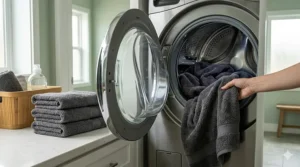
During the first three washes, the towels will shed some excess fibers. This is normal and actually desirable—you’re removing loose material that would otherwise cling during use. Tumble dry on medium heat to reactivate the charcoal. The heat causes temporary expansion of the porous structure, essentially “resetting” the adsorption sites for maximum effectiveness.
Long-Term Care Strategy
The cardinal rule: never use bleach, harsh detergents, or fabric softeners. Bleach chemically alters the fiber structure and can destroy the charcoal’s porosity. Harsh detergents leave residues that clog those precious microscopic pores. Fabric softeners create a hydrophobic coating that repels water—exactly the opposite of what you want in a towel.
Wash towels separately from items with hooks, Velcro, or rough hardware that can snag the delicate loop construction. If a snag occurs, resist the urge to pull—instead, use sharp scissors to trim the loop flush with the surrounding fabric. This prevents the snag from running and creating larger damage.
For stain removal, pre-treat with Dawn dish soap (its degreasing properties work exceptionally well on oil-based stains) or oxygen cleaners like OxiClean. Avoid letting stained towels sit for days before treatment—prompt action prevents stains from setting permanently.
Storage and Rotation
Allow towels to fully dry between uses by hanging them spread flat rather than folded over a bar—folded towels create a moisture-trapped microenvironment where bacteria can proliferate despite charcoal properties. Good air circulation is your ally here.
Rotate between at least two sets of towels. This extends lifespan by reducing wear frequency on any single towel and ensures you always have a backup during washing cycles. With proper rotation, quality bamboo charcoal towels should deliver 5-7 years of reliable service.
Real-World Scenario Analysis: Matching Towels to Lifestyles
The Daily Gym Commuter
You’re hitting the gym 5-6 times weekly, showering there, and need a towel that won’t turn your gym bag into a biohazard by afternoon.
Priority: Maximum odor control and quick-dry capability.
Recommended: Lutava or Somara charcoal models. The high charcoal content (35-70%) provides aggressive antimicrobial action, while the quick-dry properties mean the towel isn’t sitting damp in your locker for hours. Pack it in a mesh laundry bag to maximize airflow during transport.
The Humid Climate Resident
You live in Florida, coastal Louisiana, or anywhere with year-round humidity above 70%. Standard towels never fully dry, developing mildew within days.
Priority: Mildew resistance and moisture-wicking capability.
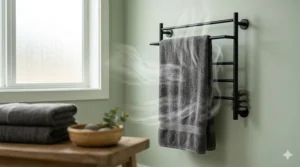
Recommended: Cozy Earth Nantucket with rice weave pattern or BedVoyage bath sheet. The textured construction promotes air circulation, while bamboo’s natural antimicrobial properties prevent mildew formation even in suboptimal drying conditions. Consider installing a towel warming rack to accelerate drying if bathroom ventilation is limited.
The Sensitive Skin Household
Family members deal with eczema, psoriasis, or general skin reactivity. Conventional towels cause irritation from chemical treatments or rough fibers.
Priority: Hypoallergenic properties and gentle texture.
Recommended: Sunday Bedding Portuguese bamboo charcoal or HIPHOP PANDA for children. The lower charcoal percentages maintain antimicrobial benefits without textural roughness, while OEKO-TEX certification ensures no harmful chemical residues that might trigger reactions.
The Sustainability-Focused Minimalist
You’re actively reducing environmental footprint and want products that align with those values.
Priority: Certified sustainable sourcing and longevity.
Recommended: Mosobam FSC-certified towels or BedVoyage’s responsibly sourced options. Look for third-party certifications (FSC, OEKO-TEX) that validate sustainability claims beyond marketing language. The extended lifespan of quality bamboo towels (5-7 years vs. 2-3 for cheap cotton) means fewer replacements and less textile waste.
How to Choose Bamboo Charcoal Bath Towels: Decision Framework
Factor 1: Charcoal Concentration vs. Skin Sensitivity
Higher charcoal content (30-70%) delivers more aggressive odor control and antimicrobial action but can feel slightly textured. If you have normal skin and prioritize maximum freshness, opt for high-concentration options. Those with sensitive skin should target moderate concentrations (15-30%) that balance benefits with gentler hand-feel.
Factor 2: GSM Weight and Your Usage Pattern
GSM (grams per square meter) indicates density. 500-600 GSM offers good absorbency with faster drying—ideal for daily use. 700+ GSM provides luxury plushness but takes longer to dry and requires more storage space. Match weight to your priorities: quick turnover or spa-like experience.
Factor 3: Size Considerations Often Overlooked
Standard 30″ x 56″ works for most, but taller individuals (6’+) should seriously consider 30″ x 70″ bath sheets for proper coverage. Smaller fitness/face towels (13″ x 30″) serve as excellent complementary purchases for gym bags or targeted skincare use. Measure your existing towels before purchasing if you’re uncertain about sizing.
Factor 4: Blend Composition Impact
50/50 bamboo-cotton blends balance softness with structural durability. Higher bamboo percentages (65%+) maximize antimicrobial properties but may sacrifice some absorbency. Cotton-dominant blends (60/40) offer familiar feel with added bamboo benefits. Consider what attributes you’re unwilling to compromise.
Factor 5: Certifications Matter More Than Marketing
OEKO-TEX Standard 100 certification verifies testing for harmful substances. FSC certification validates sustainable bamboo sourcing. These third-party verifications provide assurance beyond brand claims. If a towel lacks certifications but claims sustainability, dig deeper into manufacturing practices before purchasing.
Common Mistakes When Buying Bamboo Charcoal Bath Towels
Mistake 1: Assuming All Bamboo Towels Contain Charcoal
Many bamboo towels on the market contain zero charcoal—they’re simply bamboo viscose or rayon from bamboo. While still beneficial for natural antimicrobial properties, they lack activated carbon’s enhanced odor adsorption. Always verify “charcoal” or “activated charcoal” appears explicitly in product descriptions, not just “bamboo.”
Mistake 2: Prioritizing Lowest Price Over Quality Construction
Budget bamboo charcoal towels often use inferior activation processes or minimal charcoal content that provides negligible benefits. The $15-$20 towels flooding discount sites typically last 6-12 months before losing softness and effectiveness. Spending $45-$75 for quality construction that lasts 5+ years delivers better long-term value than replacing cheap towels annually.
Mistake 3: Ignoring GSM Weight for Intended Use
Purchasing a 700 GSM towel for daily gym use creates frustration—it takes too long to dry between workouts and occupies excessive bag space. Conversely, a 500 GSM towel for home spa use may feel disappointingly thin. Match weight to specific use cases rather than assuming higher always equals better.
Mistake 4: Improper Care from Day One
Using fabric softener on bamboo charcoal towels from the first wash permanently reduces their effectiveness by coating fibers and blocking charcoal pores. This mistake cannot be reversed. Read care instructions before washing and commit to proper maintenance protocols that preserve your investment.
Mistake 5: Expecting Miracles Without Understanding Limitations
Bamboo charcoal towels significantly reduce odor and bacterial growth, but they’re not self-cleaning magic. If you leave a soaking wet towel balled up in a gym bag for three days, it will smell—physics wins. The technology extends freshness and reduces washing frequency, but basic hygiene practices still apply.
Bamboo Charcoal Bath Towels vs. Traditional Cotton: The Objective Comparison
Absorbency Performance
Quality bamboo viscose can absorb up to 60% more moisture per fiber than conventional cotton due to its hollow micro-structure. However, cotton’s maturity in textile engineering means manufacturers have optimized weaving techniques over centuries. The practical result: premium bamboo towels absorb comparably to premium cotton, but dry 30-40% faster post-use. That faster drying time matters more than raw absorbency for most real-world applications.
Antimicrobial Properties
Bamboo contains bamboo kun, a natural antimicrobial agent, while cotton possesses no inherent bacterial resistance. Laboratory testing shows bamboo textiles inhibit bacterial growth by 70-90% compared to cotton controls. Add activated charcoal to bamboo and you’re looking at compounded antimicrobial effects that cotton simply cannot match without chemical treatments.
Environmental Footprint
Bamboo requires zero pesticides or fertilizers to thrive, grows to harvest maturity in 3-5 years versus cotton’s annual cycle, and requires significantly less water according to sustainability research. However, the viscose conversion process (dissolving bamboo into fiber) uses chemicals that must be properly managed. FSC-certified bamboo from responsible manufacturers addresses this concern. Cotton production consumes enormous water resources and typically involves heavy pesticide use, though organic cotton mitigates some issues at increased cost.
Durability and Lifespan
Cotton’s longer fiber length (when using premium varieties like Egyptian or Pima) can outlast bamboo in pure tensile strength. However, bamboo’s natural antimicrobial properties mean it maintains freshness and appearance longer without degradation from bacterial activity. The sweet spot: bamboo-cotton blends that leverage both materials’ strengths for extended functional lifespan.
Cost-Per-Use Analysis
Initial purchase: cotton wins on upfront cost. Long-term value: bamboo charcoal towels’ extended usability between washes (reducing water, energy, and detergent costs), longer functional lifespan (5-7 years vs. 2-3 for standard cotton), and maintained appearance justify higher initial investment. Calculate cost over expected lifespan rather than sticker price alone.
What to Expect: Real-World Performance Over Time
Months 1-6: The Honeymoon Phase
Your new bamboo charcoal towels perform flawlessly. They stay fresh for days between uses, dry noticeably faster than your old cotton towels, and feel luxuriously soft against skin. The novelty of not smelling mildew after forgetting them in the washer overnight seems almost magical. This period validates your purchase decision and reinforces proper care habits.
Months 6-18: Settling Into Routine
The towels have softened further with repeated washing (bamboo actually improves with laundering when cared for properly). You’ve likely adjusted your entire towel rotation to bamboo charcoal options because the performance difference versus cotton becomes increasingly apparent. Any initial skepticism about “does this really work?” has evaporated into documented reality—you’re washing towels less frequently yet maintaining hygiene standards.
Years 2-4: Mature Performance
The towels show minimal wear if you’ve followed care guidelines. No fraying edges, maintained absorbency, continued odor resistance. This is when the value proposition crystallizes—you’ve now outlasted the lifespan of multiple cheap towel sets friends have replaced. The return on investment becomes quantifiable in reduced replacement costs and lower utility bills from less-frequent washing.
Years 5+: End-of-Life or Extended Service
Quality bamboo charcoal towels entering year five should still function adequately, though maximum absorbency may decrease 10-15% from peak performance. At this stage, consider repurposing them as cleaning rags, pet bath towels, or donating if still presentable. The charcoal’s antimicrobial properties persist even as fibers naturally break down, making them superior cleaning tools compared to degraded cotton alternatives.
Long-Term Cost & Maintenance: The Hidden Savings
Initial Investment vs. Replacement Cycle
Let’s examine real numbers. A quality bamboo charcoal towel costs $45-$75 and lasts 5-7 years with proper care. A basic cotton towel costs $15-$25 but requires replacement every 2-3 years due to deterioration, loss of absorbency, and persistent odors despite washing. Over 10 years, the bamboo towel requires 1-2 purchases ($45-$150 total), while cotton demands 3-5 replacements ($45-$125 total). The break-even happens around year 4, after which bamboo pulls ahead.
Water and Energy Cost Reductions
Bamboo charcoal towels’ extended freshness means washing every 5-7 days instead of cotton’s typical 2-3 days. That’s roughly 150 fewer wash loads annually for a family of four. At average U.S. utility rates ($0.13/kWh electricity, $2.50 per 1000 gallons water), washing a full load costs approximately $1.50 in combined utilities. 150 loads equals $225 annual savings. Over those same 10 years: $2,250 in utility cost avoidance.
Detergent Consumption
Fewer washes mean less detergent. A family using 150ml detergent per load saves 22.5 liters annually by reducing wash frequency. At ~$15 per 3L bottle of quality detergent, that’s $112.50 saved yearly, or $1,125 over a decade.
The Intangible Benefits
Time saved not doing laundry has value too, though it’s harder to quantify. If each laundry session requires 30 minutes of human attention (loading, transferring, folding), 150 avoided loads annually equals 75 hours reclaimed—nearly two full work weeks. Assign whatever value you place on personal time to calculate this benefit.
Total 10-Year Cost Comparison
Cotton towels: $125 (replacements) + $0 (no savings) = $125
Bamboo charcoal: $150 (replacements) – $2,250 (utility savings) – $1,125 (detergent savings) = -$3,225 net benefit
The bamboo charcoal towels effectively pay you $3,225 over a decade while delivering superior performance. That’s before factoring in time savings or environmental benefits from reduced resource consumption.
Frequently Asked Questions
❓ How often should I wash bamboo charcoal bath towels compared to regular cotton towels?
❓ Do bamboo charcoal towels really stay odor-free, or is it marketing hype?
❓ Can I use fabric softener with bamboo charcoal bath towels?
❓ Are bamboo charcoal towels safe for sensitive skin and babies?
❓ How do I reactivate the charcoal in bamboo charcoal bath towels?
Conclusion: Making the Smart Investment in Better Bath Hygiene
Bamboo charcoal bath towels represent genuine innovation in an everyday product category that hasn’t seen meaningful advancement in decades. The activated carbon technology isn’t gimmickry—it’s proven science delivering measurable benefits in odor control, bacterial resistance, and extended usability between washes. For anyone tired of musty-smelling towels, endless laundry cycles, or simply seeking more sustainable household products, these towels offer practical solutions backed by both ancient wisdom and modern textile engineering.
The investment makes particular sense for specific scenarios: gym enthusiasts dealing with post-workout towel storage, households in humid climates battling perpetual mildew, families with sensitive skin seeking chemical-free antimicrobial protection, or anyone committed to reducing environmental impact through decreased washing frequency and extended product lifespan.
Yes, the upfront cost runs higher than cheap cotton alternatives—$45-$90 versus $15-$25. But when you calculate the total cost of ownership including replacement cycles, reduced utility bills, decreased detergent consumption, and reclaimed time not doing laundry, the bamboo charcoal option becomes obviously economical over any timeframe beyond two years.
Choose based on your specific needs rather than assuming one size fits all. High charcoal concentrations for maximum odor fighting. Lower concentrations for sensitive skin. Premium GSM weights for luxury experience. Lighter weights for quick-dry efficiency. The beauty of this market maturing is that options now exist for every use case and priority.
Start with one or two quality towels rather than immediately replacing your entire linen closet. Experience the performance difference firsthand. Most people become converts after 30 days when they realize they genuinely are washing towels half as often without any hygiene compromise.
The bathroom revolution isn’t coming—it’s already here, hiding in plain sight as a simple towel upgrade that delivers outsized benefits. Make the switch, follow the care guidelines, and enjoy the fresh-smelling, long-lasting performance that finally matches what towels should have been delivering all along.
Recommended for You
- 7 Best Copper Infused Bath Towels Kill Bacteria 2026
- 7 Best Silver Infused Antimicrobial Towels for Healthier Homes 2026
- 7 Best Fast Drying Bath Towels That Actually Work (2026)
Disclaimer: This article contains affiliate links. As an Amazon Associate, I earn from qualifying purchases. If you purchase products through these links, we may earn a small commission at no additional cost to you.
✨ Found this helpful? Share it with your friends! 💬🤗
