
In This Article
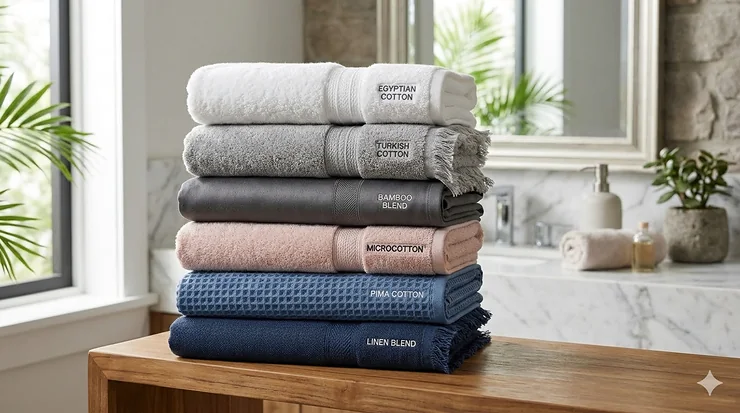
Ever wrapped yourself in a plush hotel towel and thought, “Why don’t my towels feel like this?” You’re not alone. The secret lies in understanding luxury bath towel materials comparison and choosing the right premium natural fibers for your needs.
Here’s the thing most people don’t realize: the difference between a scratchy department store towel and a cloud-like luxury towel isn’t just about price. It’s about the fiber composition, construction method, and weight density measured in GSM (grams per square meter). Whether you’re eyeing best modal bath towels for their silky softness or researching tencel bath towels benefits for their eco-friendly production, each material brings unique advantages to your daily routine.
In this comprehensive guide, I’ll walk you through seven real luxury bathroom textiles currently available on Amazon, comparing everything from Egyptian cotton’s legendary absorbency to modal’s buttery texture. We’ll explore how high-end towel fabrics stack up against each other in terms of durability, environmental impact, and that all-important spa-like feel. By the end, you’ll understand exactly which premium material deserves a spot in your linen closet—and why spending a bit more on quality towels is one of the smartest home investments you can make.
Quick Comparison Table: Luxury Bath Towel Materials at a Glance
| Material Type | Softness Level | Absorbency | Eco-Friendliness | Durability | Price Range |
|---|---|---|---|---|---|
| Turkish Cotton | Very High | Excellent | Moderate | Excellent | $40-$80 |
| Egyptian Cotton | Exceptional | Superior | Moderate | Excellent | $60-$120 |
| Tencel/Lyocell Blend | Ultra-Soft | Very High | Excellent | Very Good | $50-$100 |
| Modal Blend | Silky Smooth | High | Good | Good | $45-$90 |
| Bamboo Viscose | Cloud-Like | Excellent | Very Good | Good | $50-$100 |
💬 Just one click – help others make better buying decisions too!😊
Top 7 Luxury Bath Towel Materials: Expert Analysis
1. White Classic Luxury Bath Towels Set – Premium Turkish Cotton
White Classic Luxury Bath Towels Set represents the gold standard in Turkish cotton towels. Made from 100% long-staple Turkish cotton with a hefty 700 GSM weight, these towels deliver that coveted hotel-quality experience right in your bathroom.
Key Specifications:
- Material: 100% Turkish Combed Cotton
- Weight: 700 GSM
- Size: 27 x 54 inches
- Price Range: $45-$55 for 4-pack
These towels feature double-needle embroidered stitching that prevents fraying even after years of weekly washing. Customer reviews consistently praise their plush thickness and quick-drying properties—a rare combination in luxury towels. The long-staple fibers create superior absorbency while maintaining remarkable softness that actually improves with each wash.
✅ Pros:
- Exceptional thickness without bulkiness
- Gets softer over time
- Highly absorbent and quick-drying
❌ Cons:
- Initial lint release during first few washes
- Premium price point for budget-conscious buyers
Customer Feedback: Users report these towels maintain their fluffiness even after 50+ washes, with one reviewer noting they “feel like wrapping yourself in a cloud after every shower.”
2. American Soft Linen Luxury 4 Piece Bath Towel Set – Turkish Excellence
American Soft Linen Luxury brings professional-grade Turkish cotton to the consumer market. At 600 GSM, these towels strike an ideal balance between absorbency and manageability, making them perfect for daily use.
Key Specifications:
- Material: 100% Turkish Cotton
- Weight: 600 GSM
- Size: 27 x 54 inches
- Price Range: $38-$48 for 4-piece set
- OEKO-TEX STANDARD 100 Certified
The longer fibers in Turkish cotton create more surface area for water absorption, which translates to you drying off faster without that annoying damp-towel feeling. These towels are OEKO-TEX certified, meaning they’re tested for harmful substances—a crucial consideration for those with sensitive skin or young children.
✅ Pros:
- OEKO-TEX certified safe for all skin types
- Excellent value for premium quality
- Lightweight yet highly absorbent
❌ Cons:
- Slightly thinner than 700 GSM alternatives
- Limited color options compared to competitors
Customer Feedback: Reviewers frequently mention the “spa-like softness” and appreciate that these towels don’t develop that musty smell common with lower-quality alternatives.
3. Welhome Madison HygroCotton Tencel Lyocell 6 Piece Towel Set – Eco-Luxury Blend
Welhome Madison showcases why tencel bath towels benefits are revolutionizing the luxury towel market. This innovative blend of 80% HygroCotton and 20% Tencel Lyocell delivers superior absorbency while reducing environmental impact.
Key Specifications:
- Material: 80% HygroCotton + 20% Tencel Lyocell
- Weight: 575 GSM
- Set Includes: 2 bath, 2 hand, 2 washcloths
- Price Range: $55-$75 for 6-piece set
The proprietary hollow-core technology creates microscopic channels that wick moisture away faster than traditional cotton. Tencel production uses a closed-loop process that recycles 99.8% of solvents, making this an excellent choice for environmentally conscious buyers. According to Lenzing’s official data, Tencel production requires less than half the water used in cotton cultivation.
✅ Pros:
- Gets softer and loftier with each wash
- Environmentally sustainable production
- Superior moisture-wicking properties
❌ Cons:
- Navy color shows shedding in customer reviews
- Slightly higher maintenance requirements
Customer Feedback: Users describe these towels as “surprisingly rich and soft” with absorbency that rivals towels costing twice as much.
4. Columbia Modal 6-Piece Towel Set – Sustainable Softness
Columbia Modal represents the best modal bath towels for those prioritizing eco-friendly luxury. Made from 70% Cotton and 30% Modal (derived from sustainable beech trees), these towels offer 50% more absorbency than pure cotton.
Key Specifications:
- Material: 70% Cotton / 30% Modal
- OEKO-TEX Made in Green Certified
- Set Includes: 2 bath, 2 hand, 2 washcloths
- Price Range: $48-$68 for 6-piece set
Modal fiber comes from beech wood processed through an environmentally responsible pulp-to-fiber method. The decorative rib weave dobby border adds visual elegance while the material’s natural properties reduce pilling and lint yield. However, some customers report absorbency issues initially, which improve after multiple washings.
✅ Pros:
- Sustainably sourced from beech trees
- Lower lint yield than pure cotton
- Beautiful decorative border design
❌ Cons:
- Some color consistency issues reported
- May require 10+ washes for optimal absorbency
Customer Feedback: Mixed reviews note exceptional softness but varying experiences with absorbency depending on color choice.
5. Alusa Home Ultra Soft & Plush Viscose from Bamboo Bath Towels – Cloud-Like Comfort
Alusa Home showcases the pinnacle of bamboo viscose technology. These luxury bathroom textiles combine bamboo viscose fibers with zero-twist long-staple cotton for unmatched softness that’s up to 2x more absorbent than Egyptian cotton.
Key Specifications:
- Material: Bamboo Viscose + Zero-Twist Long-Staple Cotton
- Weight: 700 GSM
- Set Includes: 2 bath, 2 hand, 2 washcloths
- Price Range: $65-$85 for 6-piece set
- OEKO-TEX STANDARD 100 Certified
Bamboo viscose boasts natural antimicrobial properties that keep towels fresh between washes, reducing the need for frequent laundering. The zero-twist construction creates an ultra-plush feel while maintaining structural integrity. These towels are particularly suitable for those with sensitive skin or allergies due to their hypoallergenic nature.
✅ Pros:
- Natural odor-resistant properties
- Exceptionally gentle on sensitive skin
- Superior moisture absorption
❌ Cons:
- Requires gentle care to avoid fiber damage
- Premium pricing in the bamboo category
Customer Feedback: Users rave about the “spa-quality softness” and note these towels remain plush even after extended use.
6. Superior Egyptian Cotton Pile Bath Towel Set – Timeless Luxury
Superior Egyptian Cotton delivers on the legendary promise of Egyptian cotton’s extra-long staple fibers. These high-end towel fabrics feature a specially combed pile construction that becomes progressively softer and fluffier with each wash.
Key Specifications:
- Material: 100% Egyptian Cotton Pile
- Size: 55″ x 30″ (oversized)
- Set: 2 bath towels
- Price Range: $55-$75 for 2-piece set
- OEKO-TEX Certified
Egyptian cotton’s reputation rests on fibers up to 2 inches long—nearly double the length of standard cotton. This creates fewer fiber joins, resulting in smoother, stronger, more lustrous towels. The decorative braided rope border adds visual sophistication while the oversized dimensions provide generous coverage.
✅ Pros:
- Becomes softer with each wash
- Oversized dimensions for full coverage
- Prestigious Egyptian cotton heritage
❌ Cons:
- Higher price point than Turkish alternatives
- Limited availability in some colors
Customer Feedback: Customers describe a “luxurious hotel-like experience” and appreciate the towels’ lasting quality over years of use.
7. TRIDENT I’mplush 2 Piece Bath Towels – Modal Innovation
TRIDENT I’mplush blends cotton with Tencel Modal in a zero-twist yarn construction, creating naturally plush towels that excel in both comfort and environmental responsibility.
Key Specifications:
- Material: Cotton + Tencel Modal Blend
- Zero-Twist Construction
- Size: 56″ x 28″
- Price Range: $40-$55 for 2-piece set
Tencel Modal fibers are extracted from beech wood through an environmentally responsible closed-loop process. The zero-twist construction traps more air between fibers, enhancing both absorbency and that luxurious fluffy texture. These towels feature advanced “Stay New” technology that maintains freshness and vibrant colors longer than conventional towels.
✅ Pros:
- Environmentally responsible production
- Ultra-soft zero-twist construction
- Better color retention than standard towels
❌ Cons:
- Only 2 towels per set
- Slightly smaller than competitors
Customer Feedback: Users note these towels feel “fresh-looking” even after months of regular use, with minimal fading or deterioration.
Understanding Towel Weight: The GSM Factor
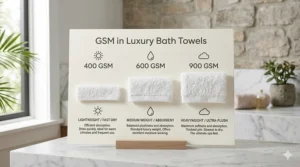
GSM (grams per square meter) is the most critical specification when evaluating luxury bath towel materials comparison. Think of it as the towel’s density fingerprint—it tells you exactly how much fabric you’re getting per square meter.
Here’s what the numbers actually mean for your daily shower routine: A 300-400 GSM towel feels thin and beach-appropriate but won’t provide that plush, absorbent experience you expect from premium towels. Budget gym towels typically fall in this range. Mid-range towels at 400-600 GSM offer decent absorbency and are popular for everyday use because they dry relatively quickly while still feeling substantial.
The luxury category begins at 600 GSM and extends to 900 GSM. The sweet spot for most bathrooms sits between 600-700 GSM. This range delivers exceptional absorbency without the bulk that makes towels difficult to wash or dry. Premium hotels typically stock 600-700 GSM towels because they strike the perfect balance—thick enough to feel indulgent, light enough to launder efficiently.
Ultra-luxury towels exceeding 750 GSM venture into true decadence territory. These heavyweight champions provide maximum plushness but come with trade-offs: longer drying times, more storage space requirements, and increased wear on washing machines. Unless you have excellent bathroom ventilation and generous linen closet space, stick with the 600-700 GSM range for optimal performance.
Material Matters: Cotton Varieties Explained
Not all cotton towels are created equal, and understanding the distinctions between varieties helps you make informed choices about premium natural fibers.
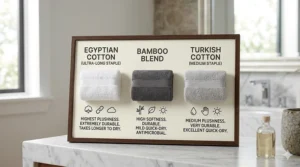
Turkish Cotton grows in the Aegean region, where unique climate conditions produce extra-long fibers with exceptional strength. The longer fibers mean fewer fiber joins in the yarn, creating smoother, more durable towels that resist pilling. Turkish cotton towels are renowned for becoming progressively softer with each wash—a characteristic that delights users but frustrates those expecting immediate gratification. The Aegean climate’s specific combination of sunshine and humidity creates ideal growing conditions that are nearly impossible to replicate elsewhere.
Egyptian Cotton comes from the Nile River Valley, where similar climatic advantages produce fibers up to 2 inches long. This extra length creates remarkably smooth yarn with superior tensile strength. Genuine Egyptian cotton (look for “Giza” designations) feels silkier than Turkish varieties and typically costs 20-30% more. However, beware of misleading labeling—many products claiming “Egyptian cotton” merely contain small percentages blended with inferior fibers.
Pima Cotton, grown primarily in the southwestern United States, offers a compelling middle ground. While not quite as prestigious as Egyptian or Turkish varieties, Pima cotton’s extra-long staple fibers deliver excellent quality at more accessible price points. Many American manufacturers prefer Pima cotton for its consistency and reliable supply chains.
According to Wikipedia’s comprehensive cotton overview, cotton fiber is almost pure cellulose and has been cultivated for thousands of years across tropical and subtropical regions. The key takeaway: fiber length matters more than origin. Whether Turkish, Egyptian, or Pima, look for “long-staple” or “extra-long staple” designations to ensure you’re getting genuine premium quality.
The Rise of Tencel and Modal: Next-Generation Fibers
Modern textile innovation has produced alternatives that challenge cotton’s centuries-long dominance, and understanding these materials is essential for anyone exploring best modal bath towels or researching tencel bath towels benefits.
Tencel (Lyocell) represents the third generation of regenerated cellulosic fibers. Austrian manufacturer Lenzing AG produces Tencel through a closed-loop solvent spinning process that recycles 99.8% of chemicals used—a dramatic improvement over conventional rayon production. The wood pulp typically comes from eucalyptus trees grown on land unsuitable for food crops, avoiding competition with agriculture.
Research published in various textile journals demonstrates that Tencel production requires less than half the water used in cotton cultivation. The fibers possess a unique nano-fibril structure that creates exceptional moisture-wicking properties. This explains why Tencel-blend towels feel noticeably cooler against skin and dry faster than pure cotton alternatives. The smooth fiber surface also inhibits bacterial growth, keeping towels fresh longer between washes.
Modal shares Tencel’s sustainable production philosophy but typically uses beech wood instead of eucalyptus. The resulting fiber feels softer and more delicate than Tencel, with a texture often described as “milky” or “silky.” Modal excels in blends where its exceptional softness complements cotton’s durability. According to research from textile manufacturers, Modal fibers are approximately 50% more absorbent than conventional cotton due to their micro-gap structure.
Both materials are biodegradable and compostable under industrial conditions, unlike synthetic fibers that persist in landfills for decades. For environmentally conscious consumers, Tencel and Modal represent significant improvements over both conventional cotton (with its heavy pesticide use) and synthetic alternatives.
Bamboo Viscose: Separating Myth from Reality
The bamboo towel market is filled with both genuine innovation and misleading marketing, making it crucial to understand what you’re actually buying when you see “bamboo” on the label.
First, the uncomfortable truth: there’s no such thing as pure bamboo fiber towels in the traditional sense. Bamboo’s rigid structure can’t be spun into yarn through mechanical processing alone. What manufacturers call “bamboo towels” are actually bamboo viscose or rayon—chemically processed materials derived from bamboo cellulose. This doesn’t make them inherently inferior, but it does mean eco-conscious shoppers should look beyond simple “bamboo” claims.
High-quality bamboo viscose production follows processes similar to Tencel manufacturing. The best manufacturers use closed-loop systems that recycle chemicals, though not quite at Tencel’s 99.8% recovery rate. Look for certifications like OEKO-TEX Standard 100 or FSC (Forest Stewardship Council) certification to ensure environmentally responsible production.
Bamboo viscose’s genuine benefits include natural antimicrobial properties that resist odor-causing bacteria. This means towels stay fresher between washes—a real advantage for busy households. The fiber structure also creates excellent moisture absorption, often exceeding cotton’s performance by 30-40%. Bamboo viscose towels typically feel silkier and more lustrous than cotton equivalents.
However, bamboo viscose requires gentler care than cotton to prevent damage to its finer fibers. Avoid washing with items containing velcro or metal zippers that can snag delicate loops. Use liquid detergent instead of powder to prevent residue buildup, and skip fabric softeners entirely—they coat fibers and reduce absorbency.
The sustainability claims deserve scrutiny. While bamboo grows rapidly without pesticides, viscose processing uses potentially harmful chemicals. Reputable manufacturers properly contain and recycle these chemicals, but not all facilities meet high standards. Certifications provide your best assurance of genuinely eco-friendly production.
Blend vs. Pure: Which Performs Better?
The debate between pure fiber towels and blended materials doesn’t have a universal answer—it depends on your priorities and use cases.
Pure fiber towels (100% cotton, Egyptian cotton, or Turkish cotton) offer predictability. You know exactly what you’re getting, and centuries of textile use have proven cotton’s reliability. Pure cotton towels generally tolerate harsher treatment, surviving hot water washes and high-heat drying without significant degradation. This durability matters for families with children or heavy daily use scenarios.
Blended towels strategically combine materials to leverage each fiber’s strengths while minimizing weaknesses. A 70/30 cotton-modal blend, for example, maintains cotton’s durability while adding modal’s exceptional softness. The 80/20 HygroCotton-Tencel blend in the Welhome Madison towels achieves superior moisture-wicking without sacrificing structural integrity.
Modern blending technology has advanced considerably. Twenty years ago, blended towels often felt inconsistent—you could detect different fiber types by touch. Today’s manufacturing precisely integrates fibers at the molecular level, creating uniform fabric that performs better than either component alone.
Consider these factors when choosing between pure and blended:
Choose Pure Fibers When:
- You prefer traditional quality and proven performance
- Hot water washing and high-heat drying are essential
- You have sensitive skin and prefer knowing exact fiber content
- Maximum longevity outweighs other considerations
Choose Blends When:
- You want specific performance enhancements (faster drying, enhanced softness)
- Environmental impact is a priority (Tencel and Modal blends)
- You’re willing to follow specific care instructions
- Innovative materials appeal more than traditional options
The best luxury bathroom textiles often combine the heritage of cotton with innovations from newer fibers, creating towels that outperform either material alone.
✨ Don’t Miss These Exclusive Deals!
🔍 Take your bathroom luxury to the next level with these carefully selected products. Click on any highlighted item to check current pricing and availability. These premium materials will transform your daily routine into a spa-like experience your family will absolutely love!
Environmental Impact: Sustainable Luxury Choices
Luxury doesn’t have to come at the environment’s expense, and understanding the ecological footprint of luxury bath towel materials comparison helps you make responsible choices.
Water Consumption: Cotton cultivation is notoriously water-intensive, requiring approximately 10,000-20,000 liters of water to produce one kilogram of fabric. Egyptian and Turkish cotton typically consume slightly less due to favorable growing climates, but the difference isn’t dramatic. Tencel and Modal production requires less than half this water volume, making them objectively more sustainable choices. Bamboo grows with minimal irrigation, though viscose processing adds water consumption back into the equation.
Chemical Use: Conventional cotton farming relies heavily on pesticides and fertilizers. According to research published in environmental sustainability journals, the textile industry faces significant challenges balancing economic productivity with environmental impact. Cotton production uses roughly 16% of the world’s pesticides despite occupying less than 3% of cultivated land. Organic cotton addresses this but typically costs 20-30% more. Tencel and Modal production uses chemicals but within closed-loop systems that prevent environmental release. Look for OEKO-TEX certifications confirming the absence of harmful substances in finished products.
Carbon Footprint: Transportation distance significantly impacts total environmental cost. Turkish and Egyptian cotton shipped to the U.S. carries substantial carbon debt. Domestic Pima cotton reduces this, though it still requires resource-intensive processing. Tencel manufacturing facilities increasingly use renewable energy, and some Lenzing plants are carbon-neutral. Studies on textile sustainability and environmental impacts show that companies are implementing circular economy initiatives to reduce their carbon footprint. Bamboo’s rapid growth sequesters carbon quickly, partially offsetting processing emissions.
Biodegradability: All natural cellulosic fibers biodegrade, but timeframes vary. Pure cotton decomposes within months in industrial composting conditions. Tencel and Modal break down similarly quickly due to their cellulosic structure. However, polyester trim or binding (common in lower-quality towels) prevents complete decomposition.
Best Practices for Eco-Conscious Buyers:
- Prioritize OEKO-TEX, GOTS (Global Organic Textile Standard), or FSC certifications
- Choose Tencel or Modal blends for reduced water consumption
- Consider towel longevity—a durable towel that lasts 10 years beats a cheaper one requiring replacement every 2 years
- Look for locally manufactured products when possible to reduce transportation emissions
- Avoid fast-fashion towel trends; invest in timeless quality instead
Care and Maintenance: Maximizing Towel Lifespan
Premium luxury towels represent significant investments, and proper care dramatically extends their usable life while maintaining performance.
Initial Washing Ritual: New towels require special first-wash treatment regardless of material. Wash separately using half the normal detergent amount and one cup of white vinegar instead of fabric softener. This removes manufacturing residues and opens fibers for optimal absorbency. Skip the dryer for this first wash—line drying sets fibers properly. Some lint release is normal initially, especially with Egyptian and Turkish cotton towels.
Ongoing Washing Best Practices: Wash towels in warm water (not hot) every 3-4 uses. Hot water seems logical for sanitation, but it degrades fibers faster and sets stains more permanently. Use liquid detergent, which rinses cleaner than powder and won’t leave residue in fiber loops. Avoid bleach except for emergency stain removal—it weakens fibers and causes yellowing over time.
The Fabric Softener Fallacy: This is crucial: never use fabric softener on towels, regardless of material. Fabric softeners work by coating fibers with waxy substances that feel soft but drastically reduce absorbency. Your towels may feel fluffy initially, but they won’t dry you effectively. Instead, add half a cup of white vinegar during the rinse cycle. Vinegar naturally softens water, removes detergent residue, and actually enhances absorbency.
Drying Techniques: Tumble dry on medium heat, removing towels while slightly damp (about 95% dry). This prevents over-drying that makes fibers brittle. Shake towels vigorously before placing in the dryer to fluff loops and prevent matting. Clean your lint trap before every cycle—restricted airflow increases drying time and energy consumption.
Special Care for Delicate Fibers: Modal and Tencel blends require gentler treatment. Use cold water and skip the dryer when possible, opting for line drying instead. These fibers can pill if washed with items containing velcro, hooks, or rough zippers. Bamboo viscose similarly benefits from gentle cycles and air drying.
Storage Wisdom: Store towels in well-ventilated spaces to prevent mildew. Fold rather than hang when possible to maintain shape. Rotate your towel collection to ensure even wear—using the same two towels constantly while others sit unused creates uneven degradation.
Price vs. Value: Investment Analysis
Understanding the relationship between upfront cost and long-term value transforms how you evaluate luxury bathroom textiles.
Budget Range ($20-$40): Basic cotton towels dominate this category. You’ll find 400-500 GSM towels with acceptable initial quality but limited longevity. Expect 1-2 years of regular use before significant deterioration. These work fine for guest bathrooms or rental properties where replacement frequency matters less than initial cost.
Mid-Range ($40-$70): This sweet spot includes most of our reviewed products. You’re getting 600-700 GSM towels from Turkish cotton, quality cotton-modal blends, or entry-level bamboo viscose. Expected lifespan: 4-6 years with proper care. The cost-per-year calculation favors this tier for most households. These towels deliver genuine luxury without extreme pricing.
Premium Range ($70-$120): Egyptian cotton, high-end Tencel blends, and premium bamboo viscose occupy this category. You’re paying for extra-long staple fibers, superior manufacturing, and often more sustainable production. Lifespan: 7-10+ years. Per-year cost often equals mid-range options despite higher initial investment. Choose this tier if you prioritize maximum softness or environmental responsibility.
Ultra-Luxury ($120+): Specialized materials, handcrafted production, or designer branding justify these prices. Honestly, performance gains over the $70-$120 range are marginal for most users. Consider this tier only if you value brand prestige or have very specific requirements.
The Real Value Equation: A $60 towel set lasting 6 years costs $10 annually. A $25 set lasting 18 months costs $16.67 annually—plus the hassle of shopping for replacements more frequently. Factor in quality-of-life improvements (superior softness, better absorbency) and environmental impact, and mid-to-premium ranges typically deliver best overall value.
When to Splurge vs. Save:
- Splurge on master bathroom towels you use daily
- Save on guest bathroom towels used occasionally
- Splurge if you have sensitive skin requiring premium materials
- Save for children’s bathrooms where towels face harsh treatment
- Splurge on bath towels; save on hand towels and washcloths
Color and Style Considerations
While material quality dominates towel selection, color and style choices impact both aesthetics and practical performance.
Light vs. Dark Colors: White and light colors remain enduringly popular for good reason. They’re universally compatible with bathroom decor, show dirt immediately (encouraging regular washing), and tolerate bleach for stain removal. However, light towels require more frequent replacement as they yellow over time from body oils and hard water minerals.
Dark towels hide staining better and maintain appearance longer, but they also hide wear patterns that might indicate necessary replacement. Navy and charcoal options photograph beautifully but can show lint more visibly. Some customers report increased shedding with darker dyes, though this varies by manufacturer.
Decorative Elements: Dobby borders, jacquard patterns, and textured weaves add visual interest without sacrificing performance. These details typically don’t affect absorbency if executed properly. However, avoid towels with heavy embroidery or appliques—these add weight without improving function and can irritate sensitive skin.
Color Fastness: Premium towels use yarn-dyed or vat-dyed processes that permeate fibers deeply, resisting fading. Cheaper alternatives use surface dyeing that washes away within months. Check reviews mentioning color retention, and consider this a key quality indicator.
Frequently Asked Questions
❓ Which material is softest: modal, Tencel, or bamboo viscose towels?
❓ How often should I replace luxury bath towels?
❓ Are Tencel towels worth the extra cost compared to regular cotton?
❓ Can I put modal or Tencel blend towels in the dryer?
❓ What's the ideal GSM weight for daily-use bath towels?
Conclusion: Finding Your Perfect Luxury Towel Match
Navigating the world of luxury bath towel materials comparison ultimately comes down to matching material properties with your specific needs and values. There’s no universally “best” option—just the best choice for your circumstances.
If you prioritize traditional quality and proven performance, Turkish or Egyptian cotton towels deliver reliable luxury that improves with age. The White Classic or American Soft Linen options offer exceptional value in this category. For environmentally conscious buyers, Tencel and modal blends like the Welhome Madison provide guilt-free indulgence with objectively lower environmental footprints.
Those with sensitive skin should gravitate toward bamboo viscose options like Alusa Home, which offer natural antimicrobial properties and hypoallergenic gentleness. Budget-minded shoppers seeking maximum softness will appreciate modal blends such as the Columbia set, though be prepared for slightly different care requirements.
Remember that premium towels represent long-term investments that directly impact your daily comfort and wellbeing. A quality towel transforms ordinary routines into moments of luxury, and when you calculate cost-per-use over 5-7 years, the premium becomes quite reasonable. Choose materials aligned with your values—whether that’s sustainability, ultimate softness, or time-tested reliability—and maintain them properly to maximize your investment.
Your bathroom deserves better than thin, scratchy department store towels. Start with one quality set for your master bath, experience the difference, and you’ll never go back to mediocrity.
Recommended for You
- 7 Best Cheap Quality Bath Towels Bulk Deals in 2026
- 7 Best Affordable Bath Towels That Feel Luxury – 2026
- 7 Best Soft Baby Washcloths Organic for Sensitive Skin 2026
Disclaimer: This article contains affiliate links. If you purchase products through these links, we may earn a small commission at no additional cost to you.
✨ Found this helpful? Share it with your friends! 💬🤗
