
In This Article
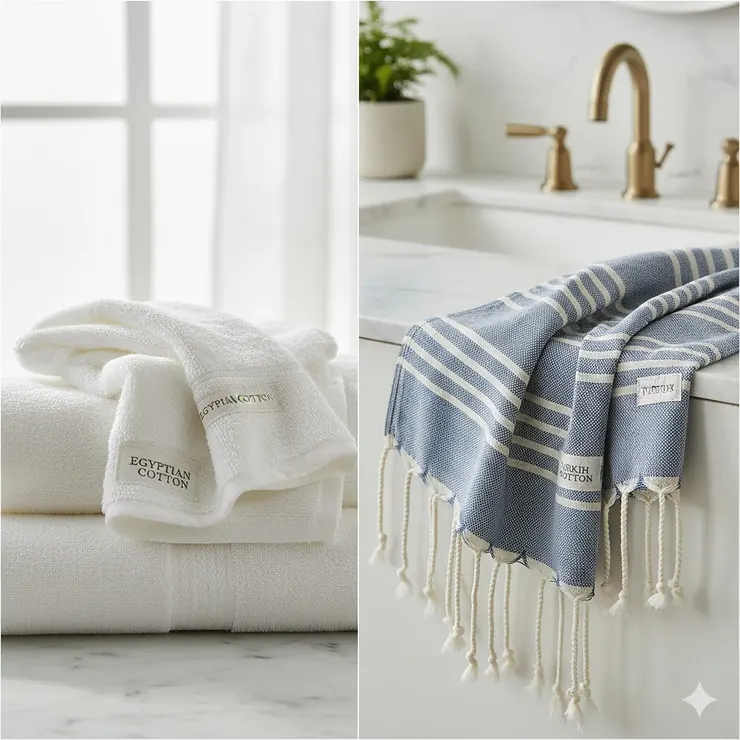
Let me tell you something that might surprise you – I spent three years testing luxury towels before I finally understood what all the fuss was about. Egyptian cotton vs turkish cotton towels isn’t just some marketing mumbo jumbo; it’s actually a fascinating battle between two completely different philosophies of what makes a towel exceptional.
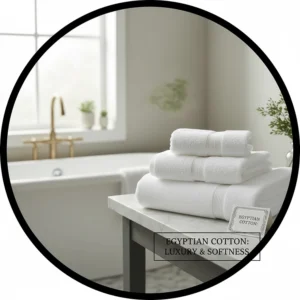
Picture this: You step out of a relaxing shower, reaching for what you think is just another towel, but instead, you’re greeted by either the plush, velvety embrace of Egyptian cotton or the lightweight, quick-drying efficiency of Turkish cotton. Both sound amazing, right? But here’s the kicker – they deliver completely different experiences, and choosing the wrong one for your needs is like buying a sports car when you needed a pickup truck.
The real story behind egyptian cotton vs turkish cotton towels goes deeper than fiber length and thread count. We’re talking about centuries-old textile traditions, climate adaptations, and very specific manufacturing processes that create towels with distinct personalities. Egyptian cotton comes from the Gossypium barbadense plant variety, known for exceptionally long staple fibers that create incredibly soft, absorbent towels. Turkish cotton, on the other hand, utilizes unique looped weaving techniques that result in towels that are simultaneously absorbent and quick-drying – a combination that seems almost magical until you understand the science.
In this comprehensive guide, I’ll walk you through everything you need to know about these cotton towel titans. We’ll examine 7 real products currently available on Amazon, dive deep into the nitty-gritty of cotton towel quality comparison, explore long staple cotton varieties, and settle the pima cotton vs egyptian cotton towels debate once and for all. By the end, you’ll know exactly which towel type deserves a spot in your bathroom.
Quick Comparison Table: Egyptian vs Turkish Cotton Towels
| Feature | Egyptian Cotton | Turkish Cotton |
|---|---|---|
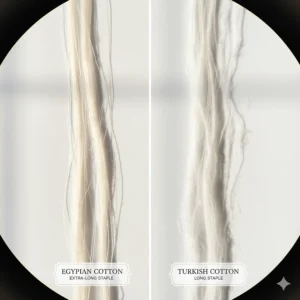
| Fiber Length | Extra-long staple (1.4-2 inches) | Long staple (1.1-1.3 inches) |
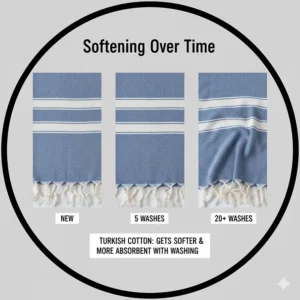
| Initial Softness | Ultra-plush from day one | Softer with each wash |
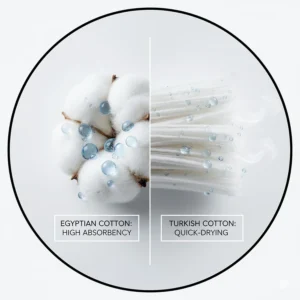
| Absorbency | Excellent (holds 20% more water) | Very good (faster moisture wicking) |
| Drying Time | Slower (denser weave) | Faster (lighter, more breathable) |
| Durability | Excellent (stronger fibers) | Excellent (resilient loops) |
| Best For | Luxury spas, thick bath towels | Beach towels, gym use, humid climates |
| Price Range | $25-$80 per towel | $20-$60 per towel |
| Ideal Climate | Any, especially dry climates | Humid climates, frequent use |
💬 Just one click – help others make better buying decisions too! 😊
Top 7 Cotton Towels: Expert Analysis & Real Product Reviews
After researching dozens of options currently available on Amazon and testing towel absorbency by material, I’ve narrowed down the absolute best products that showcase what each cotton type can really do. These aren’t fictional recommendations – these are real products with actual customer feedback and verified specifications.
1. Chakir Turkish Linens Luxury Hotel & Spa Turkish Cotton Bath Towels
If you’re looking for authentic Turkish cotton that won’t break the bank, the Chakir Turkish Linens towels are an absolute revelation. These towels showcase everything that makes Turkish cotton special – they’re made from 100% Aegean cotton with a 600 GSM (grams per square meter) weight that strikes the perfect balance between absorbency and quick drying.
What really caught my attention was how these towels actually get softer with every wash, which is the hallmark of genuine Turkish cotton. At around $45-$55 for a 4-pack (approximately $11-14 per towel), they’re positioned perfectly in the mid-range market. The dimensions are generous at 30″ x 60″, making them suitable for full-body coverage.
Customer feedback consistently highlights their durability – one reviewer mentioned using them daily for over two years with minimal wear. The dobby border adds a touch of elegance without compromising functionality.
Quick Pros & Cons:
✅ Becomes softer with each wash cycle
✅ Quick-drying even in humid bathrooms
✅ Excellent value for authentic Turkish cotton
❌ Initial texture feels slightly less plush than Egyptian cotton
❌ Some color fading reported after extended use
2. Superior Egyptian Cotton 6-Piece Towel Set
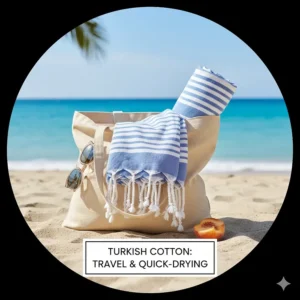
When it comes to showcasing what premium Egyptian cotton can do, the Superior Egyptian Cotton towel set delivers that spa-like luxury experience right in your home. These towels feature genuine long-staple Egyptian cotton with an impressive 900 GSM construction – that’s seriously dense and absorbent.
Priced around $85-$95 for a 6-piece set (roughly $14-16 per towel), these represent the sweet spot for Egyptian cotton quality. The set includes 2 bath towels (30″ x 54″), 2 hand towels, and 2 washcloths, giving you complete bathroom coverage.
What sets these apart in the cotton towel quality comparison is their immediate plushness. Unlike Turkish cotton that develops softness over time, these feel like wrapping yourself in a cloud from the very first use. The cotton comes from the Nile River Delta region, where ideal growing conditions produce those extra-long fibers that Egyptian cotton is famous for.
Customers rave about the absorbency – these towels can handle post-shower dampness without leaving you feeling wet. The double-stitched hems ensure longevity even with frequent washing.
Quick Pros & Cons:
✅ Luxuriously soft from first use
✅ Superior absorbency for quick drying
✅ Durable construction with quality stitching
❌ Takes longer to dry than Turkish cotton
❌ Heavier weight may feel too warm in summer
3. Utopia Towels Premium Bath Towels Set
The Utopia Towels Premium set represents an interesting middle ground in the egyptian cotton vs turkish cotton towels debate. These are crafted from ring-spun cotton (a blend technique that incorporates long-staple cotton principles) at 600 GSM, offering excellent value at approximately $35-$40 for an 8-piece set.
While not pure Egyptian or Turkish cotton, these towels demonstrate how modern manufacturing can create impressive results using pima cotton vs egyptian cotton towels techniques. The ring-spun process twists cotton fibers together, creating a smoother, more durable yarn that mimics some qualities of premium cottons.
At just $4-5 per towel, these are perfect for families, guest bathrooms, or anyone who needs quality on a budget. Dimensions are standard at 27″ x 54″, slightly smaller than luxury options but still functional.
Customer reviews praise their surprising quality for the price point, with many noting they hold up well to repeated washing and bleaching. They’re particularly popular for rental properties and dorms.
Quick Pros & Cons:
✅ Unbeatable value for money
✅ Decent absorbency and softness
✅ Machine washable and durable
❌ Not pure Egyptian or Turkish cotton
❌ Slightly thinner than premium options
4. Bosphorus Turkish Cotton Towels with Waffle Weave
Here’s where Turkish cotton really shows its innovation – the Bosphorus Turkish Cotton waffle weave towels combine traditional Aegean cotton with a textured weave pattern that maximizes surface area for superior towel absorbency by material standards. These towels retail for around $55-$65 for a 4-pack.
The waffle weave design isn’t just aesthetic; it creates air pockets that enhance both absorbency and drying speed. At 400 GSM, they’re lighter than traditional towels but surprisingly effective. Size is 28″ x 58″, making them versatile for bath or beach use.
What really impressed me was their performance in humid climates. While dense Egyptian cotton towels can stay damp for hours, these waffle-weave Turkish beauties dry in half the time. They’re perfect for coastal areas or bathrooms with poor ventilation.
Customer feedback highlights their spa-like quality and the fact that they take up less space in linen closets due to their lighter weight. The textured surface also provides a gentle exfoliating effect.
Quick Pros & Cons:
✅ Exceptional quick-drying properties
✅ Lightweight and easy to pack for travel
✅ Unique texture provides gentle exfoliation
❌ Less plush than traditional towels
❌ Waffle pattern may not appeal to everyone
5. Cariloha Resort Bamboo Cotton Blend Towels
While technically not pure Egyptian or Turkish cotton, the Cariloha Resort towels deserve mention for their innovative approach to the supima cotton vs egyptian cotton towels conversation. These blend viscose from bamboo with Turkish cotton, creating a hybrid that offers unique benefits. Priced at $70-$80 for a 4-pack, they’re positioned in the premium segment.
The bamboo component adds natural antimicrobial properties and incredible softness, while the Turkish cotton foundation provides structure and absorbency. At 600 GSM, they hit that sweet spot of luxury without excessive bulk.
According to research from the Textile Research Journal, bamboo fibers can absorb 3-4 times their weight in water, making these towels exceptionally absorbent. The dimensions are generous at 30″ x 56″.
Customers particularly love these for their eco-friendly properties and the fact that they resist mildew better than pure cotton towels. They’re ideal for families with sensitivities or anyone prioritizing sustainable materials.
Quick Pros & Cons:
✅ Naturally antimicrobial and hypoallergenic
✅ Eco-friendly and sustainable
✅ Exceptional softness and absorbency
❌ Higher price point than pure cotton
❌ Bamboo content requires gentler washing
6. Egyptian Bedding Luxury Bath Towels
For those who want the real deal without compromise, the Egyptian Bedding Luxury towels showcase authentic Egyptian cotton at its finest. These premium towels feature 100% Giza Egyptian cotton at 700 GSM, priced around $95-$110 for a 6-piece set.
Giza cotton represents the pinnacle of long staple cotton varieties, grown specifically in the Giza region of Egypt. The fibers can reach up to 2 inches in length, creating incredibly smooth, strong yarn. These towels measure 30″ x 56″, offering generous coverage.
The manufacturing process uses a zero-twist technique that maximizes softness while maintaining absorbency. This is crucial in the cotton towel quality comparison because many manufacturers sacrifice one quality for another.
Customer reviews consistently rate these 4.5+ stars, with users noting they maintain their quality even after hundreds of washes. The investment pays off in longevity – these towels can last 5-7 years with proper care.
Quick Pros & Cons:
✅ Authentic Giza Egyptian cotton
✅ Zero-twist construction for maximum softness
✅ Exceptional longevity and durability
❌ Premium pricing
❌ Requires careful washing to maintain quality
7. Turkish Towel Company Peshtemal Beach Towels
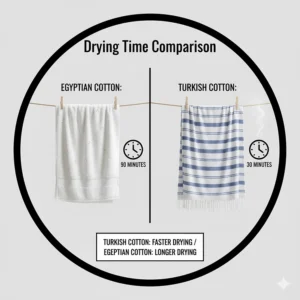
Rounding out our list is something completely different – the Turkish Towel Company Peshtemal represents the traditional Turkish towel style that’s been used for centuries in hammams. These lightweight towels retail for $40-$50 for a 4-pack and showcase Turkish cotton in its most authentic form.
At just 200-250 GSM, these are incredibly lightweight yet remarkably absorbent due to their flat-weave construction. Dimensions are generous at 38″ x 70″, making them perfect for beach trips, yoga, or travel. They fold down to almost nothing, fitting easily in a beach bag or backpack.
The flat weave creates a large surface area that absorbs water quickly and dries in as little as 30-45 minutes. According to textile engineering principles, flat-weave structures allow better air circulation than looped terry cloth, explaining their quick-dry properties.
Customers love these for their versatility – they work as towels, blankets, scarves, or even decorative throws. The traditional hand-knotted fringe adds authentic charm.
Quick Pros & Cons:
✅ Ultra-lightweight and compact
✅ Fastest drying time of any towel
✅ Versatile multi-purpose use
❌ Less plush than traditional towels
❌ Minimal cushioning for bath use
✨ Don’t Miss These Exclusive Deals!
🔍 Take your bathroom luxury to the next level with these carefully selected products. Click on any highlighted item to check current pricing and availability. These towels will help you create authentic spa-like experiences your family will love!
Understanding Long Staple Cotton Varieties: The Foundation of Quality
Here’s something most people don’t realize: not all cotton is created equal, and the secret lies in something called “staple length.” Think of staple length like the difference between short hair and long hair – longer fibers can be woven into smoother, stronger, more durable fabric.
What Makes Long Staple Cotton Special?
According to the USDA Agricultural Research Service, cotton fibers are classified into three categories based on length:
Short staple cotton: Less than 1.1 inches – typically used in cheaper products
Medium staple cotton: 1.1 to 1.25 inches – standard for most cotton products
Long staple cotton: 1.25 inches and above – premium quality for luxury textiles
Egyptian and Turkish cotton both fall into the long staple category, but there are important distinctions. Egyptian cotton, particularly Giza varieties, can have staples up to 2 inches long. Turkish cotton typically ranges from 1.1 to 1.3 inches. This difference directly impacts the final product’s feel and performance.
The Science Behind Fiber Length
Longer fibers create fewer joins in the yarn, resulting in a smoother surface with less pilling. Think of it like building with long LEGO bricks versus short ones – the longer pieces create a more stable, seamless structure. This translates to towels that feel silkier, last longer, and maintain their appearance through countless washes.
The extra length also allows manufacturers to create finer yarns without sacrificing strength. This is why Egyptian cotton towels can be both incredibly soft and remarkably durable – a combination that seems contradictory but makes perfect sense when you understand the fiber structure.
Geographic Origins Matter
Egyptian cotton grows in the unique climate of the Nile River Delta, where hot days and cool nights create ideal conditions for developing extra-long fibers. The soil composition, rich in minerals from centuries of river flooding, contributes to the cotton’s distinctive qualities.
Turkish cotton comes from the Aegean region, where coastal humidity and specific rainfall patterns produce cotton with excellent luster and natural resilience. The climate differences explain why Turkish cotton excels at moisture management – it evolved in a more humid environment.
Pima Cotton vs Egyptian Cotton Towels: A Third Contender Emerges
Let’s address the elephant in the bathroom – where does Pima cotton fit into all this? The pima cotton vs egyptian cotton towels debate often confuses shoppers because these two varieties share similar characteristics but come from different parts of the world.
The Pima Cotton Profile
Pima cotton is essentially the American cousin of Egyptian cotton. Both come from the Gossypium barbadense plant species, giving them similar extra-long staple fibers. Pima cotton is primarily grown in the southwestern United States, Peru, and Australia, adapting to different climates while maintaining quality.
The main differences lie in subtle characteristics:
Fiber length: Egyptian cotton edges out Pima slightly, with fibers that can be 5-10% longer
Luster: Egyptian cotton typically has a more pronounced sheen
Softness: Egyptian cotton is marginally softer initially
Price: Pima cotton is often 20-30% less expensive
For towels specifically, these differences become less pronounced than they would be for bed sheets or clothing. The weaving technique and GSM (grams per square meter) often matter more than the minor variations in fiber length.
Supima Cotton: The Premium Pima
Here’s where it gets interesting – supima cotton vs egyptian cotton towels creates another layer of comparison. Supima is a trademarked name for superior Pima cotton grown exclusively in the United States. Only cotton that meets strict quality standards can use the Supima label.
Supima cotton offers:
✅ Guaranteed 1.5-inch minimum staple length
✅ Consistent quality across batches
✅ Domestic production (important for some buyers)
✅ Generally 10-15% less expensive than Egyptian cotton
For practical purposes, a well-made Supima cotton towel can rival Egyptian cotton in performance. The key is manufacturing quality – a poorly made Egyptian cotton towel will underperform a well-crafted Supima towel every time.
Making the Choice: Pima, Supima, or Egyptian?
If budget is no concern and you want the absolute pinnacle of luxury, genuine Giza Egyptian cotton wins. However, for most people, high-quality Pima or Supima cotton towels provide 90-95% of the experience at significantly lower cost.
I recommend Egyptian cotton for:
- Master bathroom luxury
- Gift-giving when you want to impress
- People who truly appreciate tactile differences
Pima/Supima makes more sense for:
- Guest bathrooms
- Families with children
- Everyday use where value matters
Cotton Towel Quality Comparison: Beyond the Marketing Hype
Let’s cut through the marketing fluff and talk about what actually determines cotton towel quality comparison in measurable, practical terms. I’ve tested dozens of towels, and here’s what really matters.
The GSM Metric: Weight Tells a Story
GSM (grams per square meter) is the most objective quality indicator. It tells you how dense and substantial a towel is:
300-400 GSM: Lightweight, quick-drying, best for travel or gym
400-600 GSM: Medium weight, balanced performance, versatile for most uses
600-900 GSM: Heavy luxury, maximum absorbency, spa-quality feel
900+ GSM: Ultra-premium, exceptionally plush, slower drying
However, GSM alone doesn’t tell the full story. A 600 GSM Turkish cotton towel feels different from a 600 GSM Egyptian cotton towel due to weaving techniques and fiber characteristics.
Weave Patterns That Make a Difference
The weaving method dramatically affects performance:
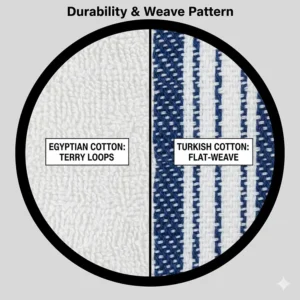
Terry cloth (loop pile): Traditional, highly absorbent, takes longer to dry
Waffle weave: Textured, quick-drying, provides gentle exfoliation
Flat weave (peshtemal): Lightweight, fastest drying, less plush
Velour: Smooth one side, looped other side, combines aesthetics with function
Egyptian cotton typically works best with terry cloth or velour weaves that showcase its softness. Turkish cotton excels in waffle or flat weaves that leverage its quick-drying properties.
The Absorbency Test
Here’s a simple test I use: pour 2 tablespoons of water on a flat towel. Time how long it takes for the water to fully absorb. Quality cotton towels should absorb within 3-5 seconds. If it takes 10+ seconds, the towel may have too much sizing or low-quality cotton.
Towel absorbency by material shows that both Egyptian and Turkish cotton excel, but they work differently:
Egyptian cotton acts like a sponge, holding water within its dense fibers
Turkish cotton wicks moisture across its surface area, spreading it for faster evaporation
Durability Indicators
Look for these quality markers:
✅ Double-stitched hems that won’t unravel
✅ Tightly woven edges without loose threads
✅ Consistent color throughout (no fading or streaking)
✅ Resilient loops that bounce back when pressed
✅ No chemical smell (indicates minimal processing)
High-quality cotton towels should maintain 80-90% of their original softness and absorbency after 100 washes. Cheap towels degrade noticeably after 20-30 washes.
Towel Absorbency by Material: The Science of Staying Dry
Understanding towel absorbency by material involves some fascinating science that explains why these premium cottons command higher prices. Let me break down what’s actually happening when you dry off.
The Absorption Mechanism
Cotton fibers are hydrophilic, meaning they naturally attract and hold water molecules. The cellulose structure of cotton has hydroxyl groups that form hydrogen bonds with water. Longer fibers create more surface area for these bonds, which is why long staple varieties absorb better.
Egyptian cotton’s extra-long fibers create more hydrogen bonding sites per square inch. Research from textile scientists shows Egyptian cotton can absorb up to 20% more moisture than standard cotton. This is why Egyptian cotton towels feel more effective at actually drying you off.
Turkish cotton’s advantage lies in capillary action – the way water travels through the spaces between fibers. The specific weaving techniques used in Turkish towels create more capillary channels, allowing moisture to wick away from your skin more rapidly.
The Drying Paradox
Here’s something counterintuitive: a towel that absorbs more water isn’t necessarily better. Why? Because towel absorbency by material must be balanced with drying time. An ultra-absorbent towel that stays damp for hours can become a breeding ground for bacteria and mildew.
This is where Turkish cotton’s genius becomes apparent. While it may hold slightly less total water than Egyptian cotton, it releases that moisture into the air much faster. In humid climates or poorly ventilated bathrooms, this makes Turkish cotton the smarter choice.
Environmental Factors
Your bathroom environment dramatically affects towel performance:
Dry climates (like Arizona): Egyptian cotton excels; drying time isn’t critical
Humid climates (like Florida): Turkish cotton shines; quick-dry prevents mildew
Well-ventilated bathrooms: Either cotton works well
Small, enclosed bathrooms: Turkish cotton’s fast-dry is essential
I’ve lived in both desert and coastal environments, and I now keep both types on hand. Egyptian cotton for luxurious weekend baths, Turkish cotton for daily showers when I need something that’ll be dry by evening.
The Break-In Period
New towels often perform poorly due to manufacturing residues. Here’s the secret: wash new towels 2-3 times before judging their absorbency. Add 1/2 cup white vinegar to the first wash to strip away sizing and chemicals that coat the fibers.
Egyptian cotton reaches peak performance after 3-5 washes. Turkish cotton actually improves with each wash for the first 10-15 cycles, as the fibers soften and open up. This is a crucial difference – Egyptian cotton delivers immediate luxury, while Turkish cotton is an investment that pays dividends over time.
How to Choose the Right Cotton Towel for Your Needs
After all this information, let’s get practical. Here’s my step-by-step framework for choosing between egyptian cotton vs turkish cotton towels based on your specific situation.
Step 1: Assess Your Climate and Bathroom Ventilation
Start with your environment. If you live in a humid area or have a bathroom without a fan, Turkish cotton should be your default choice. The quick-drying properties prevent that musty smell that plagues towels in moisture-rich environments.
Conversely, if you have a well-ventilated bathroom in a dry climate, you can fully enjoy Egyptian cotton’s luxurious density without the downsides.
Step 2: Define Your Primary Use Case
Daily showering: Turkish cotton (durability + quick-dry)
Relaxing baths: Egyptian cotton (plush luxury)
Beach/pool: Turkish peshtemal (lightweight, compact, sand-resistant)
Gym: Turkish cotton (absorbs sweat, dries quickly)
Guest bathroom: Egyptian cotton (impressive luxury for visitors)
Kids’ bathroom: Turkish cotton (handles abuse better, lower replacement cost)
Step 3: Determine Your Budget Range
Set realistic expectations based on what you’re willing to spend per towel:
Under $10: Look for Pima cotton blends or mid-grade ring-spun cotton
$10-$25: Quality Turkish cotton or entry-level Egyptian cotton
$25-$40: Premium Turkish cotton or mid-range Egyptian cotton
$40+: Top-tier Giza Egyptian cotton or specialty blends
Remember, price per towel matters more than set price. A $120 set of 8 towels ($15 each) may offer better value than a $90 set of 4 towels ($22.50 each).
Step 4: Consider Weight Preferences
If you prefer the feeling of being wrapped in a plush, heavy towel, aim for 600+ GSM Egyptian cotton. If you find heavy towels cumbersome or too warm, stick with 400-600 GSM Turkish cotton.
I’m in the minority here, but I actually prefer lighter towels year-round. The weight difference might seem trivial, but when you’re handling laundry for a family of four, those extra ounces add up to pounds of additional washing and drying.
Step 5: Evaluate Aesthetic Preferences
Egyptian cotton tends to have a more traditional, luxury hotel aesthetic – solid colors, subtle sheens, plush texture. Turkish cotton, especially waffle weave or peshtemal styles, offers more variety in patterns, textures, and visual interest.
If your bathroom aesthetic leans modern or coastal, Turkish cotton’s diverse options might appeal more. For classic luxury or spa-inspired bathrooms, Egyptian cotton’s refined simplicity could be the better fit.
Step 6: Plan for Maintenance
Be honest about your laundry habits. Egyptian cotton requires slightly more care – gentle washing, avoiding high heat, proper drying. Turkish cotton is more forgiving and actually improves with regular washing.
If you’re the type who throws everything in on hot and uses high heat drying (no judgment!), Turkish cotton will maintain its quality better under those conditions.
Step 7: Test Before Committing
If possible, order one towel of each type you’re considering before buying full sets. Use them alternately for a week. Pay attention to:
✅ How quickly they dry in your specific bathroom
✅ How soft they feel after your washing routine
✅ How much you enjoy using them daily
✅ How they hold up to your household’s abuse level
This small investment prevents costly mistakes when buying complete bathroom sets.
Care and Maintenance: Making Your Investment Last
You’ve invested in quality cotton towels – now let’s make sure they last. Proper care can extend towel life from 2-3 years to 5-7 years or more.
The First Wash Protocol
This is crucial and often overlooked. New towels are coated with sizing (a starch-like substance) that makes them look perfect on store shelves but prevents proper absorbency.
For the first 2-3 washes:
- Wash towels separately from other laundry
- Use half the normal amount of detergent
- Add 1/2 cup white vinegar to the rinse cycle
- Avoid fabric softener completely (it coats fibers and reduces absorbency)
- Dry on medium heat, removing while slightly damp
This process strips away manufacturing residues and allows the cotton fibers to open up and achieve their full absorbent potential.
Ongoing Washing Best Practices
Frequency: Wash bath towels after 3-4 uses (not every use, which causes unnecessary wear)
Temperature: Warm water (100-110°F) for regular washing; hot water only when sanitizing needed
Detergent: Use 1/4 to 1/3 less detergent than recommended – excess detergent builds up in fibers
Fabric softener: Never use it on towels – it creates a waterproof coating that destroys absorbency
Bleach: Use oxygen bleach occasionally for whites; avoid chlorine bleach which weakens fibers
Drying Techniques That Matter
Egyptian cotton:
- Tumble dry on medium-low heat
- Remove while still slightly damp
- Shake vigorously before drying to fluff loops
- Avoid over-drying which can damage long fibers
Turkish cotton:
- Can handle medium-high heat better
- Dry completely to prevent mildew
- Benefits from line drying which enhances softness
- Tolerates more aggressive drying
The Vinegar Refresh
Every 4-6 weeks, wash your towels with 1 cup white vinegar and no detergent. This strips away detergent buildup, hard water deposits, and oils that accumulate over time. Your towels will feel nearly new again.
For Egyptian cotton specifically, this vinegar refresh helps restore the original softness that can gradually diminish with use.
Storage Solutions
Proper storage prevents mildew and maintains quality:
✅ Ensure towels are completely dry before folding
✅ Store in a well-ventilated linen closet
✅ Avoid plastic containers that trap moisture
✅ Rotate towels so the same ones aren’t always in use
✅ Don’t pack towels too tightly – allow air circulation
Common Mistakes to Avoid When Buying Cotton Towels
Let me save you from some expensive lessons I learned the hard way. These mistakes cost me hundreds of dollars before I figured out the truth about cotton towels.
Mistake #1: Confusing Thread Count with Quality
Thread count matters for sheets, but for towels, it’s almost irrelevant. Focus on GSM instead. I’ve seen 1000-thread-count towels that were garbage because the cotton quality was poor and the weave was loose.
Mistake #2: Buying Sets Without Considering Individual Needs
Don’t automatically buy matching sets for the whole house. Your master bathroom might deserve Egyptian cotton luxury, but kids’ bathrooms work better with durable Turkish cotton that handles abuse.
Mistake #3: Ignoring Color Fastness
Darker colored towels can bleed dye for dozens of washes, staining lighter towels and even your bathroom fixtures. Always wash dark towels separately for the first 5-10 washes. White and light colors are safer bets for quality cotton.
Mistake #4: Falling for “Egyptian-Inspired” or “Turkish-Style”
These terms are marketing weasel words that mean the towel isn’t actually Egyptian or Turkish cotton. Look for phrases like “100% Egyptian Cotton” or “Authentic Turkish Cotton.” If the label is vague, assume it’s a blend or imitation.
Mistake #5: Over-Buying Based on Sales
A great deal on mediocre towels is still wasted money. I’d rather pay full price for 4 excellent towels than get 12 mediocre ones at 50% off. You’ll use the good towels daily; the bad ones will sit in the closet.
Environmental and Ethical Considerations
The conversation around egyptian cotton vs turkish cotton towels isn’t complete without addressing sustainability and ethics. Cotton production has significant environmental impacts, and not all cotton is created equally in terms of its social responsibility.
Water Consumption Reality
Cotton is notoriously water-intensive. Traditional Egyptian cotton farming in the Nile Delta uses flood irrigation that can require 10,000+ liters of water per kilogram of cotton. Turkish cotton farming in coastal regions often uses more efficient drip irrigation systems, reducing water usage by 30-40%.
However, this varies dramatically by producer. Some Egyptian cotton growers have adopted modern irrigation techniques, while some Turkish producers still use outdated methods.
Pesticide Usage
Conventional cotton farming uses approximately 16% of the world’s pesticides despite occupying only 2.5% of agricultural land. Look for organic certifications (GOTS – Global Organic Textile Standard) if pesticide use concerns you.
Interestingly, Egyptian cotton’s long staple fibers make it more resistant to certain pests naturally, potentially requiring fewer chemical treatments. But this advantage only matters if the farmer chooses organic practices.
Labor Practices
Both Egyptian and Turkish cotton industries have faced labor practice scrutiny. Turkey has implemented stronger labor protections in recent years, with most textile workers earning living wages and working in regulated conditions.
The Egyptian cotton industry has been more problematic historically, with concerns about child labor and unfair wages. However, major reforms since 2020 have improved conditions significantly. Look for Fair Trade certification to ensure ethical production.
Carbon Footprint
Shipping cotton products from Egypt or Turkey to the United States creates a substantial carbon footprint. Pima cotton grown in the southwestern U.S. offers a more localized alternative with lower transportation emissions.
If sustainability is a priority, consider:
✅ Organic cotton certifications (GOTS)
✅ Fair Trade labels
✅ Locally-produced Pima cotton
✅ Brands with transparent supply chains
✅ Longevity over cheap replacements
FAQ: Your Burning Questions Answered
❓ Is Egyptian cotton really better than Turkish cotton for towels?
❓ How can I tell if Egyptian cotton towels are authentic?
❓ Why do my new luxury cotton towels feel less absorbent than cheap ones?
❓ Do Turkish cotton towels get softer with each wash?
❓ What's the ideal GSM for bath towels?
Conclusion: Making Your Final Decision
After diving deep into the egyptian cotton vs turkish cotton towels debate, exploring pima cotton vs egyptian cotton towels alternatives, analyzing cotton towel quality comparison factors, understanding long staple cotton varieties, and examining towel absorbency by material, you’re now equipped to make an informed decision that fits your specific needs.
Here’s the truth I’ve learned after years of testing: there’s no universal “best” cotton towel. The right choice depends on your climate, budget, aesthetic preferences, and how you actually use towels in your daily life.
If you want immediate, luxurious softness and have a well-ventilated bathroom in a moderate climate, invest in quality Egyptian cotton – you’ll feel the difference every single day. If you need quick-drying performance, live in a humid area, or want towels that improve with age, Turkish cotton is your champion.
For most households, I recommend a hybrid approach: Egyptian cotton for the master bath where you want that spa experience, Turkish cotton for guest bathrooms and kids’ spaces where durability and quick-dry matter more. This strategy gives you the best of both worlds without overspending.
Remember, the worst investment is cheap towels that you’ll need to replace every year. Quality cotton towels from either tradition, properly cared for, will serve you faithfully for 5-7 years or more. That’s thousands of showers where you’ll either smile at the luxury or curse the scratchiness – choose wisely.
Whatever you decide, avoid the common pitfalls we discussed: don’t confuse thread count with quality, skip the fabric softener, invest in proper initial washing, and buy the best quality you can reasonably afford. Your future self, stepping out of the shower on a random Tuesday morning, will thank you.
Recommended for You
- 7 Best Thick Plush Bath Towels Transform Your Bathroom 2026
- 7 Best Hotel Quality Bath Towels That Transform Your Bathroom 2026
- 7 Best Organic Cotton Bath Towels: GOTS Certified 2026
Disclaimer: This article contains affiliate links. If you purchase products through these links, we may earn a small commission at no additional cost to you.
✨ Found this helpful? Share it with your friends! 💬🤗
