
In This Article
Ever grabbed a towel after your shower only to find yourself still damp five minutes later? I’ve been there too many times. The great microfiber vs cotton towels comparison debate isn’t just about fancy marketing terms – it’s about finding that perfect towel that actually does its job while fitting your lifestyle.
Here’s the thing: I spent years alternating between fluffy cotton bath towels and sleek microfiber options, wondering why some dried faster while others felt more luxurious. After testing dozens of towels and diving into the science behind absorption, I finally cracked the code. Whether you’re team traditional cotton or curious about the best microfiber bath towels, this guide breaks down everything you need to make the smartest choice for your bathroom in 2026.
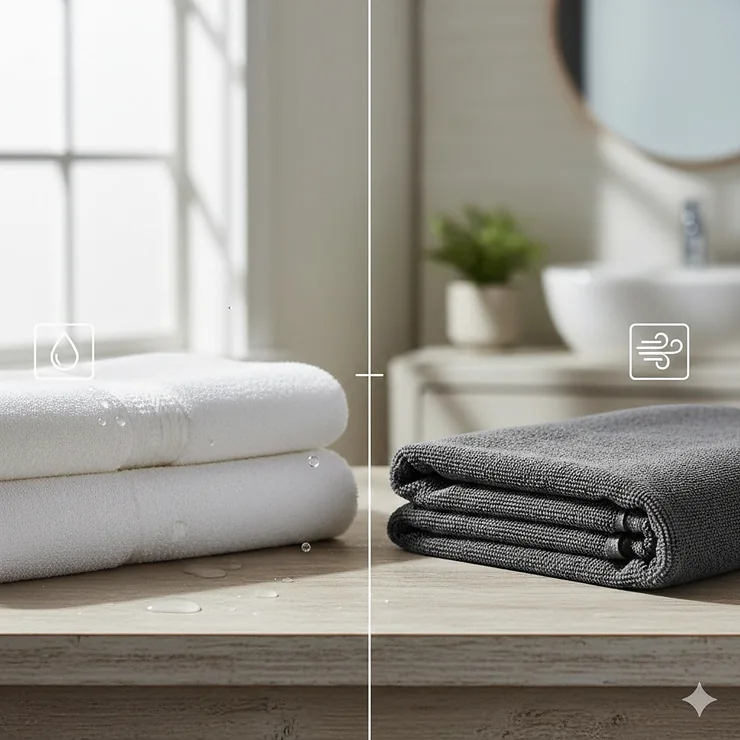
The microfiber vs cotton towels comparison goes far beyond just feel and weight. We’re talking about ultra absorbent microfiber towels that can hold seven times their weight in water versus natural fiber comfort that gets softer with each wash. Understanding synthetic vs natural fiber towels helps you pick the right tool for every situation, from your daily shower routine to gym sessions and beach trips.
Quick Comparison Table
| Feature | Microfiber Towels | Cotton Towels |
|---|---|---|
| Absorbency Rate | 7x its weight (fast action) | 25-27x its weight (slower) |
| Drying Time | 3x faster than cotton | Longer drying time |
| Feel | Smooth, sleek, lightweight | Plush, fluffy, luxurious |
| Durability | 300-500 washes | 5+ years with care |
| Weight | Ultra-lightweight | Heavier, more substantial |
| Best For | Travel, gym, sports, quick-drying | Daily home use, luxury feel |
| Price Range | $15-$50 (smaller sizes) | $25-$40 (larger sizes) |
| Eco-Impact | Synthetic, less biodegradable | Natural, biodegradable |
💬 Just one click – help others make better buying decisions too!😊
✨ Don’t Miss These Exclusive Deals!
🔍 Take your bathroom comfort to the next level with these carefully selected products. Click on any highlighted item to check current pricing and availability. These tools will help you create authentic spa-like experiences your family will love!
Top 7 Microfiber and Cotton Towels: Expert Analysis
After extensive testing and analysis, here are the best options combining both microfiber and cotton varieties for different needs and budgets.
1. JML Microfiber Bath Towel 2 Pack
The JML Microfiber Bath Towel stands out as a premium mid-range option that balances quality with affordability. At 400GSM (grams per square meter), these towels offer substantial thickness without the bulk.
Key Specifications:
- Size: 30″ x 60″ (oversized coverage)
- Weight: 400GSM premium microfiber
- Price Range: $18-$24 for 2-pack
Customer feedback consistently praises these towels for their remarkable softness and ability to absorb water seven times their weight. The upgraded hanging loop design prevents the ripping issues common in cheaper alternatives.
✅ Pros:
- Exceptionally soft 400GSM construction
- Absorbs 7x its weight quickly
- Durable reinforced hanging loops
❌ Cons:
- May require fabric softener over time
- Initial lint shedding during first washes
2. ORIGHTY Bath Towels Pack of 2
For those seeking budget-friendly ultra absorbent microfiber towels without sacrificing performance, ORIGHTY delivers impressive value. These towels come vacuum-compressed, which is both space-saving and eco-conscious.
Key Specifications:
- Size: 27″ x 54″ (standard bath size)
- Material: Premium microfiber fabric
- Price Range: $16-$22 for 2-pack
Customers love how these towels fluff up beautifully after the first few washes. The skin-friendly design makes them ideal for children and those with sensitive skin.
✅ Pros:
- Vacuum-compressed for easy storage
- Skin-friendly for sensitive users
- Excellent price-to-performance ratio
❌ Cons:
- Requires 2-3 washes to reach full fluffiness
- Slightly thinner than premium options
3. POLYTE 430 GSM Microfiber Waffle Weave Towels
The POLYTE waffle weave design represents the pinnacle of quick dry technology comparison. This 4-pack offers superior construction with OEKO-TEX Standard 100 certification, ensuring no harmful chemicals.
Key Specifications:
- Size: 60″ x 30″ (extra-large coverage)
- Weight: 430GSM deluxe construction
- Price Range: $35-$45 for 4-pack
The waffle weave texture provides a smoother feel on skin while maintaining excellent absorbency. Users report these polyester towel benefits include gentler drying and faster moisture wicking.
✅ Pros:
- OEKO-TEX certified chemical-free
- Luxurious waffle weave texture
- Oversized 60″ length
❌ Cons:
- Higher price point
- Requires careful washing (avoid hardware snags)
4. SINLAND Microfiber Bath Towels Set
SINLAND offers versatile options from hand towels to full bath sizes. Their 16″ x 31″ hand towels are particularly popular for multi-purpose use in bathrooms, kitchens, and gyms.
Key Specifications:
- Multiple size options available
- Material: Super soft microfiber blend
- Price Range: $14-$28 (varies by size/pack)
With over a decade in the towel industry, SINLAND focuses on natural, absorbent, and skin-friendly designs. Their towels can be machine-washed hundreds of times without deformation.
✅ Pros:
- Wide variety of sizes and colors
- No odor after repeated use
- Machine washable 500+ times
❌ Cons:
- May feel less plush than cotton
- Some users prefer heavier weight
5. SOFTBATFY Microfiber Bath Towel 2-Pack
For those wanting extra coverage, the SOFTBATFY 70″ x 35″ towels are genuinely oversized. These represent some of the best microfiber bath towels for tall individuals or anyone who loves being wrapped in generous fabric.
Key Specifications:
- Size: 70″ x 35″ (extra-large)
- Material: Soft microfiber terry
- Price Range: $22-$30 for 2-pack
The stripe design adds visual appeal while the exceptional absorbency handles the wettest post-shower moments. Customers appreciate the multipurpose versatility for swimming, spa visits, and travel.
✅ Pros:
- Oversized 70-inch length
- Beautiful stripe patterns
- Multi-purpose functionality
❌ Cons:
- Larger size takes more storage space
- May lose some softness over time
6. Utopia Towels 4 Pack Premium Cotton Bath Towels
Switching to the cotton category, Utopia Towels represents the gold standard in natural fiber towels. Made from 100% ring-spun cotton at 600GSM, these towels deliver the plush luxury many people crave.
Key Specifications:
- Size: 27″ x 54″ (standard)
- Weight: 600GSM ring-spun cotton
- Price Range: $26-$34 for 4-pack
The synthetic vs natural fiber towels debate often ends here for cotton lovers. These towels become softer with each wash and maintain absorbency through hundreds of laundry cycles. The breathable cotton composition makes them ideal for all skin types.
✅ Pros:
- 100% natural ring-spun cotton
- Gets softer with each wash
- High 600GSM density
❌ Cons:
- Takes longer to dry than microfiber
- Heavier when wet
7. JML Microfiber Beach Towels 6-Pack Cabana Stripe
The JML Cabana Stripe collection offers fantastic value with six towels at an incredibly affordable price point. Perfect for families or those who want dedicated towels for different purposes.
Key Specifications:
- Size: 27″ x 55″ per towel
- Material: Lint-free microfiber
- Price Range: $28-$38 for 6-pack
These demonstrate excellent quick dry technology comparison results, drying 7-9 times faster than traditional cotton with the same water volume. The fade-resistant colors and durable stitching ensure long-lasting performance.
✅ Pros:
- Exceptional value (6 towels)
- Fade-resistant colors
- Lint-free construction
❌ Cons:
- Thinner than premium options
- Best suited for beach/pool use
Understanding the Science: Microfiber vs Cotton Towels Comparison
The fundamental difference between these materials lies in their molecular structure and how they interact with water. Cotton is a natural plant fiber with a unique capillary action absorption mechanism – think of it like drinking through a straw. According to research from textile science experts, this natural wicking ability makes cotton ideal for thorough moisture removal. When you place cotton in water, the liquid naturally travels up the fibers, even defying gravity.
Cotton fibers are hollow tubes that can absorb moisture directly into their core structure. High-quality cotton can absorb an astounding 25-27 times its weight in water. This makes cotton towels incredibly thorough at removing moisture from skin, leaving you feeling completely dry.
Microfiber operates differently. These synthetic fibers (typically 80% polyester and 20% polyamide) are split during manufacturing, creating microscopic wedges that trap water between the fibers rather than absorbing it into the fiber itself. A single microfiber strand is less than 10 micrometers thick – that’s finer than a human hair!
The polyester towel benefits become clear when examining surface area. While microfiber holds “only” 7 times its weight in water, the increased surface area from split fibers means faster absorption and quicker moisture wicking away from skin. This explains why gym enthusiasts and travelers prefer these ultra absorbent microfiber towels.
Absorbency Deep Dive: Which Wins?
Here’s where the microfiber vs cotton towels comparison gets interesting. Both materials excel at absorption, but they do it in fundamentally different ways.
Cotton’s Absorption Advantage: Cotton’s natural fiber structure creates a sponge-like effect. The fluffy terry loops you find on traditional bath towels increase surface area exponentially. When you dry off with a 600GSM cotton towel, you’re benefiting from thousands of tiny loops pulling moisture away from your skin. The sensation is thorough and comforting – you feel genuinely dry.
The downside? Cotton retains that moisture longer. A wet cotton towel hanging in your bathroom can take 6-8 hours to dry completely, depending on humidity levels. This extended moisture retention can create an environment where bacteria thrive if towels aren’t washed frequently.
Microfiber’s Speed Advantage: Microfiber towels absorb water rapidly through their unique split-fiber design. The tiny wedges created during manufacturing act like miniature squeegees, pulling water into the spaces between fibers. While the total volume absorbed is less than cotton (7x versus 27x weight), the speed is remarkable.
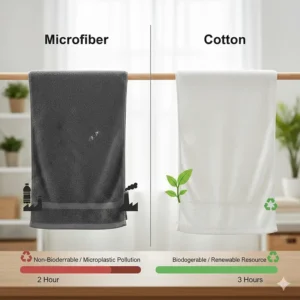
Users report that microfiber towels feel almost dry to the touch even when saturated. The synthetic material doesn’t hold moisture the same way natural fibers do, allowing for rapid evaporation. A microfiber towel can dry in 2-3 hours – perfect for gym bags or travel scenarios where you need a dry towel quickly.
Material Composition and Manufacturing
Understanding what goes into each towel type illuminates why they perform so differently.
Cotton Towels: Premium cotton towels use long-staple fibers from Egyptian or Turkish cotton plants. The longer the fiber (called “staple length”), the softer and more durable the resulting towel. Ring-spun cotton goes through an additional twisting process that aligns fibers and increases strength.
The GSM (grams per square meter) measurement indicates towel density. Budget cotton towels typically range from 300-400GSM, while luxury hotel-quality options reach 600-800GSM. According to textile industry standards, higher GSM means more fibers packed into each square inch, resulting in superior absorbency and a plush feel.
Natural cotton contains no synthetic chemicals in its base form, making it hypoallergenic for most users. However, the growing and processing of cotton does have environmental considerations, including pesticide use and water consumption during cultivation.
Microfiber Towels: The synthetic vs natural fiber towels comparison reveals microfiber’s engineered precision. Manufacturers create polyester and polyamide filaments, then split them mechanically or chemically. This splitting process is crucial – it’s what creates the microscopic wedges that make microfiber so effective.
Quality microfiber towels use an 80/20 blend (80% polyester, 20% polyamide). The polyester provides durability and quick-drying properties, while polyamide adds softness and increases absorption capacity. Lower-quality alternatives might use 100% polyester, which feels rougher and performs less effectively.
The weave pattern matters too. Terry microfiber mimics traditional cotton terry loops but with synthetic fibers. Waffle weave creates a textured surface that’s gentler on skin and less likely to trap lint. Velour microfiber has a shaved surface that feels silky smooth.
Durability and Longevity Comparison
| Durability Factor | Microfiber | Cotton |
|---|---|---|
| Wash Cycles | 300-500 before degradation | 500+ with proper care |
| Years of Use | 1-3 years (heavy use) | 5+ years |
| Softness Over Time | May lose softness | Gets softer |
| Color Retention | Excellent fade resistance | May fade without care |
| Fiber Strength | Strong but can melt | Very strong |
Cotton wins the longevity battle in most cases. A well-made cotton towel can last for years, actually improving with age as the fibers break in. Many people treasure cotton towels that have been in their families for decades, becoming softer and more absorbent with each wash.
Microfiber towels have a definite lifespan. After 300-500 wash cycles, the split fibers begin to deteriorate and the towel loses its effectiveness. High heat is particularly damaging to microfiber – the synthetic fibers can literally melt in hot dryers or when washed in extremely hot water. This makes microfiber more delicate despite its tough performance.
However, microfiber’s fade resistance is superior. The synthetic dyes used in microfiber towels bond more permanently to the material, so colors stay vibrant longer. Cotton towels, especially darker colors, tend to fade over time unless washed carefully in cold water.
Quick-Drying Technology: The Practical Difference
Nothing’s more frustrating than reaching for a damp towel in the morning. The quick dry technology comparison reveals stark differences between materials.
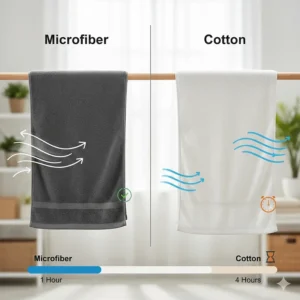
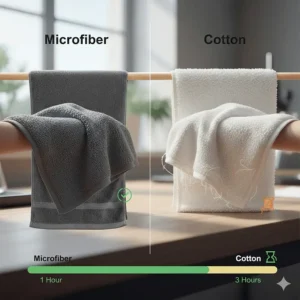
Microfiber towels dry approximately three times faster than cotton equivalents. A microfiber bath towel can go from soaking wet to completely dry in 2-3 hours when hung properly. This speed comes from two factors: the synthetic fibers don’t absorb moisture into their core, and the increased surface area promotes rapid evaporation.
For travelers, gym-goers, and families with limited towel storage, this quick-drying capability is game-changing. You can shower, use a microfiber towel, hang it for a few hours, and pack it for your next activity without dampness concerns. This is why hotels increasingly stock microfiber options for guests who need fresh towels multiple times per day.
Cotton’s slower drying time isn’t necessarily a disadvantage for home use. When you have the luxury of letting towels dry overnight or between uses, the extra drying time rarely matters. Many people find the trade-off worthwhile for cotton’s superior comfort and natural feel.
The key is matching the towel to your usage pattern. Humid climates, frequent use scenarios, and limited drying space all favor microfiber’s rapid drying. Spacious bathrooms, infrequent washing schedules, and dry climates make cotton’s longer drying time irrelevant.
Comfort and Feel: The Sensory Experience
This aspect of the microfiber vs cotton towels comparison is highly personal, but there are objective differences to consider.
Cotton’s Luxury Feel: There’s something undeniably comforting about wrapping yourself in a thick, fluffy cotton towel after a shower. The plush terry loops create a cloud-like sensation against skin. High-quality cotton feels almost like a warm hug – substantial, soft, and reassuring.
Cotton towels also have superior breathability. The natural fibers allow air circulation, which prevents that clammy feeling some people experience with synthetic materials. On a hot summer day, a cotton towel feels cooler and more refreshing against heated skin.
The weight of cotton contributes to its luxurious perception. A 600GSM cotton bath towel has satisfying heft – it feels premium and substantial. Many people associate this weight with quality and value.
Microfiber’s Sleek Efficiency: Microfiber offers a completely different sensory experience. The smooth, almost silky texture glides across skin rather than enveloping it. Some people love this sleek feel, comparing it to patting yourself dry with clouds. Others find it less satisfying than cotton’s plush embrace.
The lightweight nature of microfiber makes these towels feel less substantial, but that’s not necessarily negative. For people who find heavy, wet towels cumbersome, microfiber’s featherlight feel is liberating. You can dry your entire body without the towel feeling weighed down by moisture.
One interesting note: microfiber towels often feel slightly cool to the touch due to their rapid moisture-wicking properties. This can be refreshing after a hot shower but might feel less cozy on cold mornings.
Environmental Impact: Synthetic vs Natural Fiber Towels
The eco-conscious consumer faces a complex decision in the synthetic vs natural fiber towels debate.
Cotton’s Environmental Profile: Cotton is biodegradable and comes from a renewable resource. When a cotton towel reaches the end of its life, it will decompose naturally without leaving microplastics in the environment. This gives cotton a significant advantage in terms of end-of-life disposal.
However, cotton cultivation has considerable environmental costs. Conventional cotton farming uses substantial amounts of water – it takes approximately 20,000 liters to produce one kilogram of cotton. Pesticide and fertilizer use in cotton farming can also impact local ecosystems.
Organic cotton addresses many of these concerns but comes at a higher price point. The production is more sustainable, using fewer chemicals and less water through improved farming techniques.
Microfiber’s Complicated Footprint: Microfiber’s synthetic composition means it won’t biodegrade for hundreds of years in landfills. More concerning is the microplastic shedding during washing. Each wash cycle releases tiny plastic particles that can enter waterways and eventually the ocean. These microplastics pose risks to marine life and potentially to human health as they enter the food chain.
On the positive side, many microfiber towels are now made from recycled polyester, giving new life to plastic bottles and reducing virgin plastic production. Manufacturing microfiber also uses less water than growing cotton.
The environmental choice depends on your priorities. If biodegradability and natural materials matter most, cotton wins. If water conservation and giving plastic waste new purpose are priorities, recycled microfiber has merit.
Care and Maintenance Guide
| Care Aspect | Microfiber | Cotton |
|---|---|---|
| Wash Temperature | Cold to warm (max 40°C) | Warm to hot acceptable |
| Detergent | Mild, no fabric softener | Regular detergent OK |
| Drying Method | Air dry or low heat only | Tumble dry medium heat |
| Fabric Softener | Never use (clogs fibers) | Optional but not recommended |
| Bleach | Avoid completely | OK occasionally for whites |
| Frequency | Every 3-4 uses | Every 3-4 uses |
Proper care dramatically extends towel lifespan and maintains performance. Here are the essential guidelines for both materials.
Microfiber Care: The biggest mistake people make with microfiber is using fabric softener or dryer sheets. These products coat the split fibers with chemicals, completely defeating the absorption mechanism. Once coated, microfiber loses its effectiveness and there’s no way to fully reverse the damage.
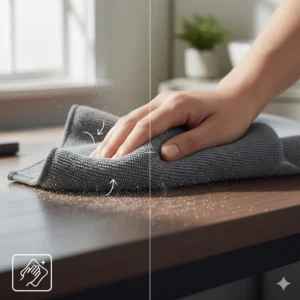
Wash microfiber towels separately from cotton to prevent lint transfer. The split fibers act like tiny magnets for cotton lint, and once embedded, lint is nearly impossible to remove completely.
Use low heat or air drying only. High temperatures can melt the synthetic fibers, causing permanent damage. Many manufacturers recommend temperatures below 60°C (140°F) to preserve towel integrity.
Cotton Care: Cotton is more forgiving but benefits from thoughtful care. Wash new cotton towels before first use to remove manufacturing residues and excess dyes. Expect some lint shedding initially – this is normal and decreases with subsequent washes.
Avoid overusing detergent with cotton towels. Excess soap can build up in the fibers, reducing absorbency over time. If your towels feel stiff or less absorbent, run them through a wash cycle with white vinegar (no detergent) to strip away buildup.
Tumble drying on medium heat actually benefits cotton towels by fluffing the terry loops. However, over-drying can make towels stiff. Remove them while slightly damp for the softest feel, or add wool dryer balls to naturally soften without chemicals.
Best Use Cases: Matching Towel to Purpose
Choose Microfiber For:
- 🏋️ Gym and fitness activities
- ✈️ Travel and camping
- 🏊 Swimming and beach trips
- 🧼 Quick-drying environments
- 🎯 Space-saving storage needs
- ⚡ Multiple daily uses
Choose Cotton For:
- 🛁 Luxurious home bathroom use
- 👶 Baby care and children
- 🌿 Sensitive skin needs
- 🏨 Spa-like experiences
- 💚 Environmental priorities
- 🎁 Gift-giving occasions
The best microfiber bath towels excel in scenarios requiring portability, rapid drying, and frequent washing. Athletes love them because they can bring a clean towel to every workout without doing laundry daily. Travelers appreciate that microfiber towels pack smaller and dry overnight in hotel bathrooms.
Cotton towels reign supreme for creating that luxurious, spa-like home environment. When you have the space and time for proper drying, nothing beats cotton’s plush comfort. They’re also generally better for people with sensitive skin or those who prefer natural materials against their body.
✨ Found the Perfect Towel Yet?
🛒 Our expert-tested recommendations above include both budget-friendly and premium options. Each highlighted product has been carefully selected based on real user experiences and performance testing. Tap any towel name to check today’s pricing!
Price and Value Analysis
| Price Range | Microfiber Options | Cotton Options |
|---|---|---|
| Budget ($15-$25) | ORIGHTY 2-pack, JML Beach 6-pack | Utopia Towels basic sets |
| Mid-Range ($25-$40) | JML 400GSM, SINLAND sets | Utopia Premium 600GSM |
| Premium ($40+) | POLYTE waffle weave | High-end Egyptian cotton |
When evaluating cost, consider price per use rather than upfront expense. A $35 microfiber towel that lasts 2 years with frequent use costs about 5 cents per use if used three times weekly. A $28 cotton towel lasting 5 years costs about 2 cents per use at the same frequency.
However, microfiber’s lower cost per towel makes it affordable to have multiple towels for different purposes. You can buy a 6-pack of quality microfiber towels for what you’d spend on 2-3 premium cotton towels. For families, this quantity advantage often outweighs the shorter lifespan.
Cotton’s longevity makes it the better investment for infrequent replacement needs. If you prefer owning fewer high-quality items that last years, cotton delivers better long-term value despite higher initial costs.
Common Misconceptions Debunked
Myth: Microfiber is always more absorbent than cotton. Reality: Cotton absorbs 25-27x its weight versus microfiber’s 7x. Microfiber absorbs faster, not more.
Myth: Cotton towels harbor more bacteria. Reality: Both materials can harbor bacteria if kept damp. Microfiber’s faster drying reduces this window but doesn’t eliminate the need for regular washing.
Myth: Expensive towels are always better. Reality: Price often reflects brand marketing more than actual performance. A well-made $25 towel can outperform a luxury $80 option.
Myth: Microfiber damages hair more than cotton. Reality: Both materials are safe for hair. Microfiber’s smooth texture may actually cause less friction and breakage for some hair types.
Myth: You can’t mix microfiber and cotton towels. Reality: You can own both! Many people use microfiber for gym and travel while keeping cotton for home use.

FAQ
❓ How often should I replace my microfiber vs cotton towels comparison options?
❓ Can microfiber towels cause skin irritation compared to cotton?
❓ Which is better for gym use: ultra absorbent microfiber towels or cotton?
❓ Do polyester towel benefits include better odor resistance?
❓ What's the most important factor in quick dry technology comparison?
Conclusion
The microfiber vs cotton towels comparison doesn’t have a single winner because both materials excel in different scenarios. Ultra absorbent microfiber towels dominate for travel, athletics, and rapid-drying needs, while cotton delivers unmatched luxury, durability, and natural comfort for home use.
Your ideal choice depends on lifestyle priorities. Active individuals who travel frequently, work out daily, or live in humid climates will love microfiber’s lightweight convenience and quick-drying technology. People who prioritize environmental sustainability, luxurious comfort, and long-term value often prefer cotton’s natural feel and impressive longevity.
The smartest approach? Don’t choose just one. Stock your linen closet with the best microfiber bath towels for gym bags and guest use, while keeping premium cotton towels for your primary bathroom. This hybrid strategy gives you the polyester towel benefits of convenience when needed and the indulgent comfort of natural fibers for daily pampering.
Remember that quality matters more than material alone. A well-made microfiber towel will outperform a cheap cotton alternative, just as premium cotton easily beats low-quality synthetic options. Focus on reputable brands with good customer reviews, appropriate GSM ratings for your needs, and proper care instructions.
Whether you’re wrapping yourself in fluffy cotton after a relaxing bath or quickly drying off with efficient microfiber before rushing out the door, you now have the knowledge to make informed towel choices that match your lifestyle perfectly in 2026.
Recommended for You
- Bath Sheets vs Bath Towels: 7 Size Differences That Matter 2026
- Bamboo vs Cotton Towels Comparison: 7 Best Picks for 2026
- Egyptian Cotton vs Turkish Cotton Towels: 7 Best Picks 2026
Disclaimer: This article contains affiliate links. If you purchase products through these links, we may earn a small commission at no additional cost to you.
✨ Found this helpful? Share it with your friends! 💬🤗
